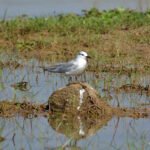
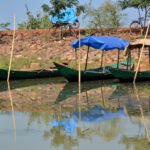
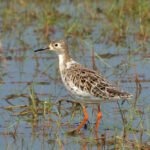
Situated approx 70 km south of Bhuvaneshwar; Mangalajodi is a lesser known paradise for the migratory birds & the nature lovers, alike…..
Tucked away in the northeastern fringe of Chilika Lake in Orissa (the largest brackish water lake in Asia), this little hamlet harbouring rich wetlands is much less known than its famous parent lagoon……
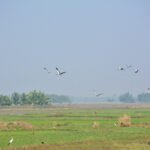
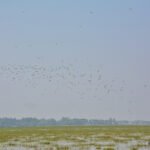
Mangalajodi has been a winter home for migratory birds that start arriving in the region by the middle of October, every year!
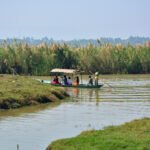
The vast area of the marshy wetlands interspersed with reeds and vegetation and expanses of water running through the channels, provide food and shelter to these waterfowls and raptors until they start moving to their breeding grounds by February-March
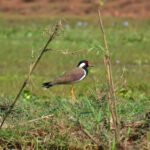
Red wattled Lapwing
Bronze Winged Jacana. It is a wader with huge feet and claws which enables it to walk on floating vegetation in shallow lakes that are its preferred habitat. It is found in south and east Asia within the tropical zone.
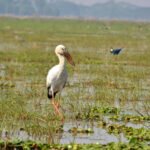
Open Billed Storks
The Asian openbill or Asian openbill stork is a large wading bird in the stork family. This distinctive stork is found mainly in the Indian subcontinent and Southeast Asia….
Their usual foraging habitats are inland wetlands. On agricultural landscapes, birds forage in crop fields, and in seasonal marshes. Birds may move widely in response to habitat conditions and migrate thousands of kilometers
It is greyish or white with glossy black wings and tail. The adults have a gap between the arched upper mandible and recurved lower mandible of the beak….
……this gap which is thought to be an adaptation that aids in the handling of snails, their main prey…..
The story of Mangalajodi is interesting. Till 2000, this place was considered as poachers paradise where people were engaged in poaching the birds and their eggs and meat transported to cities…..
In the year 2000 when bird census was held, the population of birds was eastimated around only 5000 .This was when the conservationists and environmentalists took up the challenge of motivating villagers who are largely fishermen, into conserving the population of migratory birds
Many organisations and people were involved but the efforts of Wild Orissa are significant and the results of their hard work can be now seen that the village which was once considered as poachers village now transformed into naturalists village. 2017 January census has confirmed more than 250,000 birds population……
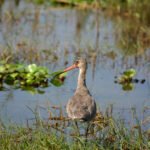
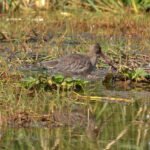
Black Tailed Godwit
The black-tailed godwit is a large, long-legged, long-billed shorebird found commonly in lowland wet grasslands and coastal grazing marshes.They migrate in flocks from western Europe, Africa, south Asia and Australia during the winters
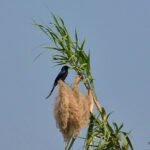
Black Drongo
The black drongo is a common resident breeder in much of tropical southern Asia. It is a wholly black bird with a distinctive forked tail….
The species is known for its aggressive behaviour towards much larger birds, such as crows & it never hesitate to dive-bomb any bird of prey that invades its territory
Citrine Wagtail. It is a slender song bird, with the long, constantly wagging tail. This species breeds in north central Asia and tundra. It migrates in winter to South Asia.
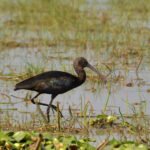
Glossy Ibis
The glossy ibis is a wading bird. Its scientific name is derived from Ancient Greek and Latin, meaning “sickle”; referring to the distinctive shape of the bill.
The glossy ibis is one of the species to which the Agreement on the Conservation of African-Eurasian Migratory Waterbirds (AEWA) applies. they are threatened by wetland habitat degradation and loss through drainage, increased salinity, groundwater extraction and invasion by exotic plants
As the birds arrive and settle amongst the lakhs of water-lilies in the wetlands, it is an amazing sight. The wetlands begin to fill in with thousands of Ruffs, godwits, plovers, sandpipers and migratory ducks. From bird murmurs in the initial stage of migration, the sound that envelops the wetlands at the peak of the migration, especially in the nights, can best be termed as a bird roar.
India’s ace birdman and author Bikram Grewal, says that Mangalajodi is far ahead of other wetlands in the country in terms of the richness of the habitat, the number of birds, and the proximity at which one gets to see the birds….
Indian Cormorant; also known as Indian shag is found mainly along the inland waters of the Indian Subcontinent. They are clever fisherbirds & often fish in groups.
Indian Pond Heron. They are widespread in south Asia. However they can be easily missed when they stalk prey at the edge of small water-bodies. Their camouflage is so excellent that they can be approached closely before they take to flight, a behaviour which has resulted in folk names and beliefs that the birds are short-sighted or blind
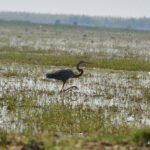
Purple Heron
The purple heron has a mostly palaearctic distribution and breeds in Europe, Asia and Africa, inhabiting mainly marshes, lagoons and lakes surrounded by dense vegetation.
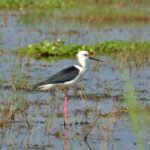
Black Winged Stilt
Whiskered Tern. The tropical forms are resident, but European and Asian birds winter south to Africa and the Indian Subcontinent.
Pacific Golden Plover
It was believed that golden plovers flocked when rain was imminent. Smaller than its European counterpart, It is migratory and winters in south Asia and Australasia
Oriental Pratincole
The oriental pratincole is also known as the grasshopper-bird. They are migratory, wintering in both India and Pakistan, Indonesia and Australasia.
Common Snipe. It is a is a small, stocky wader bird, migratory, with European birds wintering in tropical southern Asia. It is the most widespread of several similar snipes.
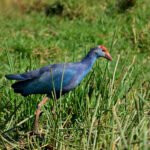
Purple Moorhen
Purple Moorhen, also known as Chilika Chiken, is a very shy bird. Their calls are very amusing as they do not keep to any standard call sometimes cackling like hens, sometimes hooting, sometimes hissing and shrieking…
They are the native Chilika wetland species that forage on insects, mollusks, water beetles, and water-plant shoots.
Garganey Duck
The Garganey is a small dabbling duck. It is migratory, with the entire population moving to southern Africa, India, and Australasia in winter.
it is found primarily in freshwater wetlands and shallow ponds, where it feeds by filtering small particles from water passed through its bill rather than by tipping up.
Northern Pintail Ducks
The northern pintail is a bird of open wetlands which nests on the ground. It feeds by dabbling for plant food and adds small invertebrates to its diet during the nesting season.
The pintail or northern pintail is a duck with wide geographic distribution that breeds in the northern areas of Europe, Asia and North America. It is migratory and winters south the equator
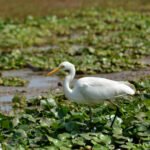
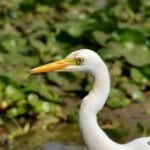
Great White Egret
great white egret[2] or great white heron[3][4][5] is a large, widely distributed egret, with four subspecies found in Asia, Africa, the Americas, and southern Europe
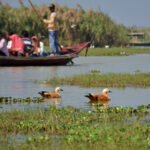
Ruddy (Brahmani) Shelduck
The ruddy shelduck, known in India as the Brahminy duck, is a distinctive waterfowl with an orange-brown body.
It is a migratory bird, wintering in the Indian subcontinent and breeding in southeastern Europe and central Asia.
If developed in the right manner through controlled ecotourism, Mangalajodi can well become another Bharatpur……
The promotion of bird sanctuary would serve dual purpose – The bird and nature lovers have access to basic facilities to satiate their appetite for bird watching…..
…….the benefits of these activities would peter down to the local people who face some displacement due to ecotourism ventures as they would get more opportunities for livelihoods and income. Which inturn would help in local efforts to save this magnificent ecohabitat.