In the region, which was known as ‘Vatsa’ in the ancient times, ‘Jejabhukti’ in the medieval times & as ‘Bundelkhand’ from the 14th century; the Temples of Khajuraho has played a significant role in shaping the Indian history….
The Khajuraho Group of Monuments is a group of Hindu and Jain temples in Madhya Pradesh, India, about 375 km northeast of the state capital, Bhopal.
Grouped into 3 geographical divisions of the Western, Eastern & Southern group of temples; it is believed that there were a total of 85 temples in Khajuraho. Only 25 of them stands today in various phases of preservation.
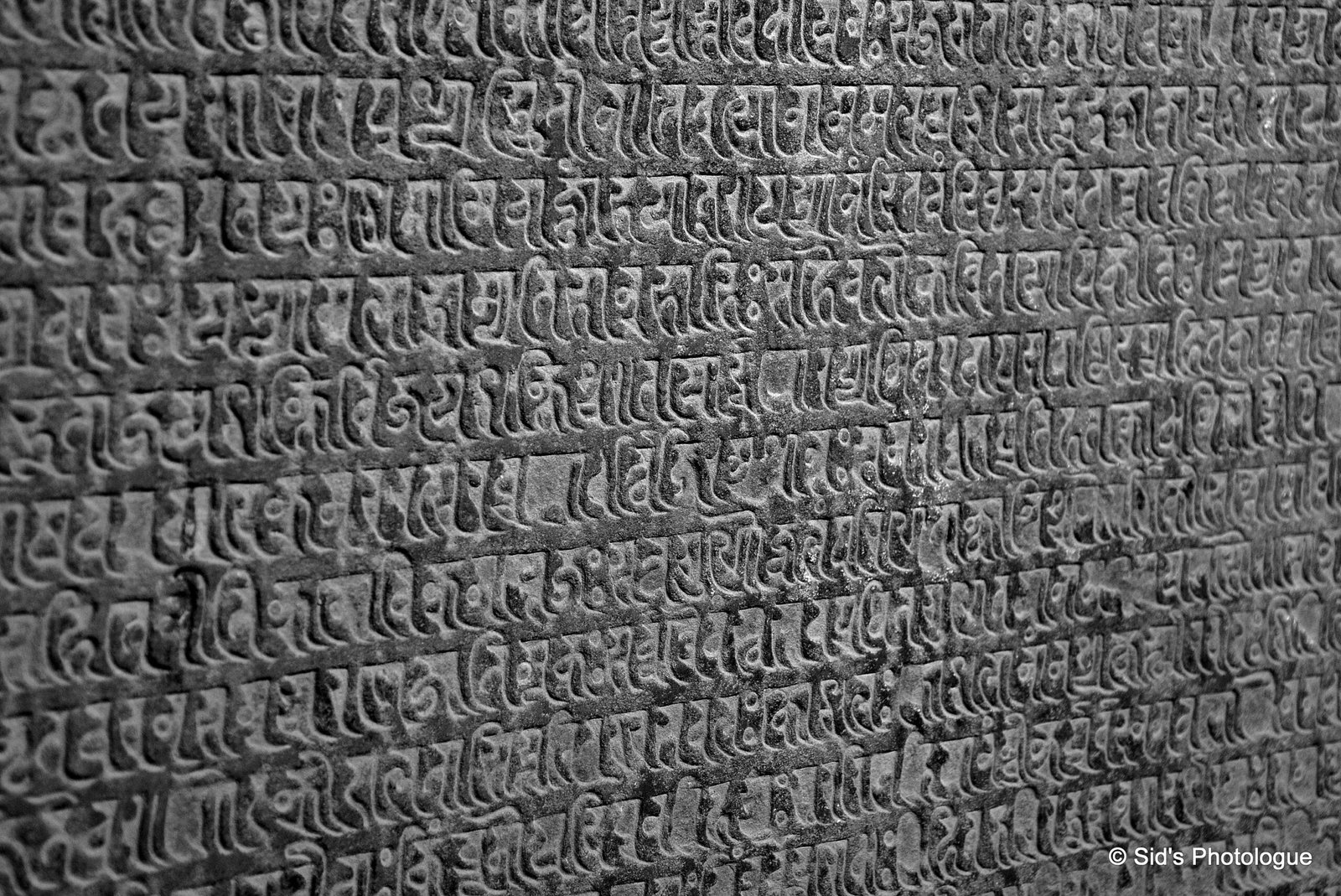
Built between 950 and 1050 AD by the Chandela dynasty, Khajuraho temples, today are amongst the UNESCO World Heritage Sites. The temples are famous for their nagara-style architectural symbolism and their erotic sculptures…..
Of the surviving temples, 6 are dedicated to Shiva and his consorts, 8 to Vishnu and his affinities, 1 to Ganesha, 1 to Sun God, 3 to Jain Tirthankars. For some ruins, there is insufficient evidence to assign the temple to specific deities with confidence.
The name Khajuraho, or Kharjuravāhaka, is derived from ancient Sanskrit (kharjura, खर्जूर means date palm, and vāhaka, वाहक means “one who carries” or bearer). Local legends state that the temples had two golden date-palm trees as their gate (missing when they were rediscovered). Another legend states that Kharjuravāhaka also means scorpion bearer, which is another symbolic name for deity Shiva (who wears snakes and scorpion garlands in his fierce form)….
The Khajuraho group of monuments were built during the rule of the Rajput Chandela dynasty. The building activity started almost immediately after the rise of their power, throughout their kingdom to be later known as Bundelkhand. Most temples were built during the reigns of the Hindu kings Yashovarman and Dhanga. Yashovarman’s legacy is best exhibited by The Lakshmana Temple, while Vishvanatha temple best highlights King Dhanga’s reign. The largest and currently most famous surviving temple is Kandariya Mahadeva built in the reign of King Vidyadhara. The temple inscriptions suggest many of the currently surviving temples were complete between 970 and 1030 AD, with further temples completed during the following decades
An overall examination of temple architecture suggests that the Hindu symbolic mandala design principle of square and circles, is present in each of the temple design. Further, the territory is laid out in three triangles that converge to form a pentagon. Scholars suggest that this reflects the Hindu symbolism for three realms or trilokinatha, and five cosmic substances or panchbhuteshvara. The temple site highlights Shiva, the one who destroys and recycles life, thereby controlling the cosmic dance of time, evolution and dissolution…..
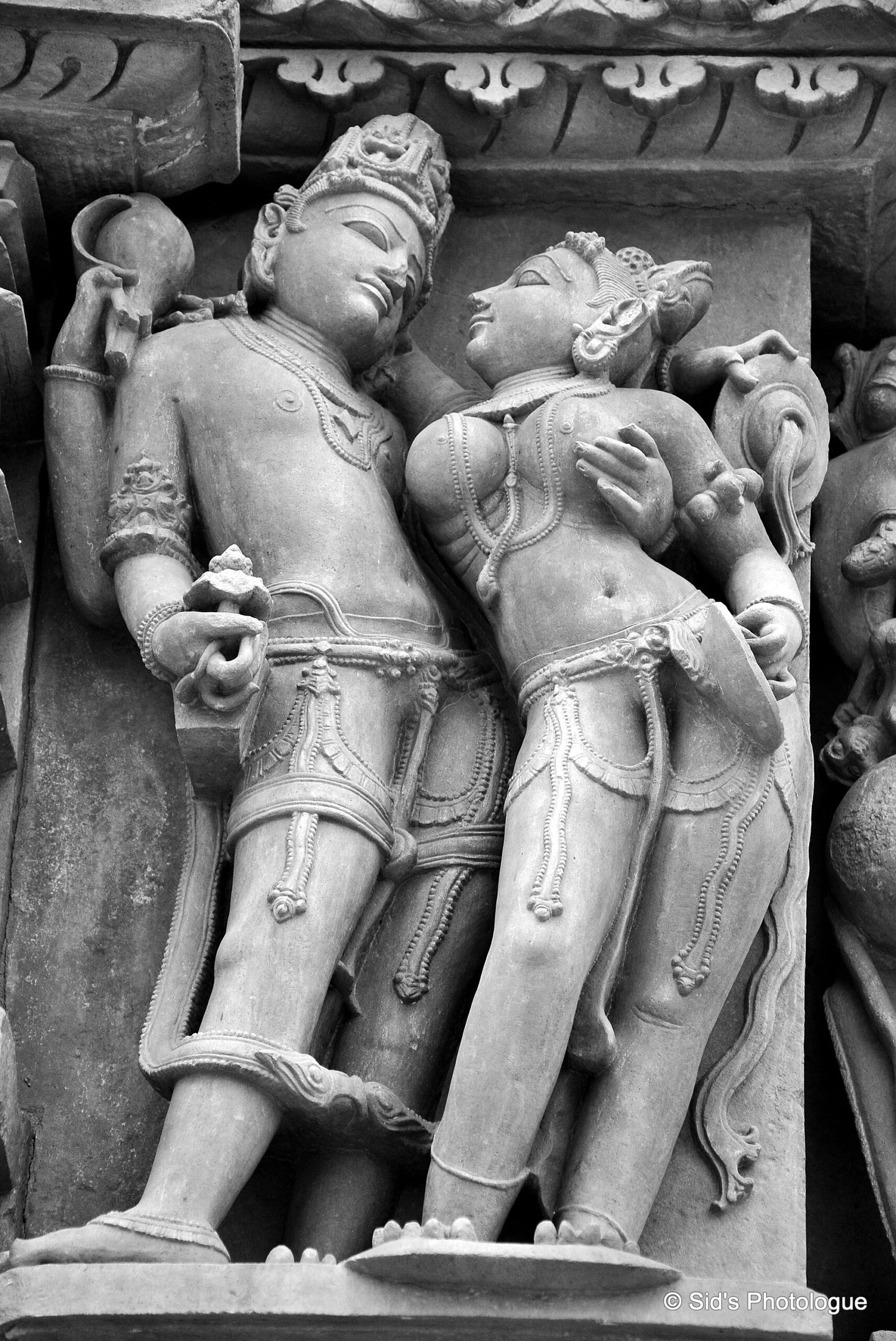
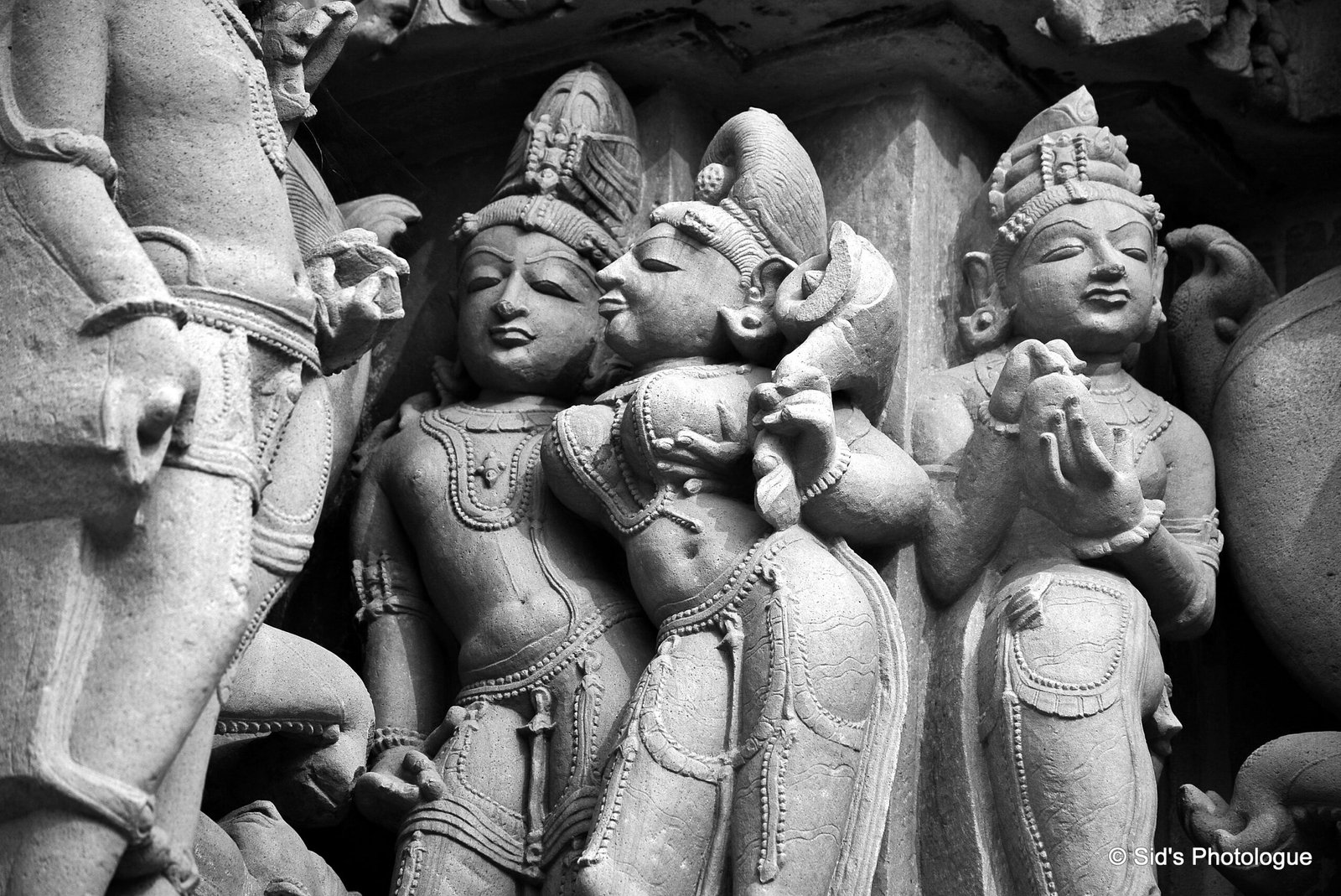
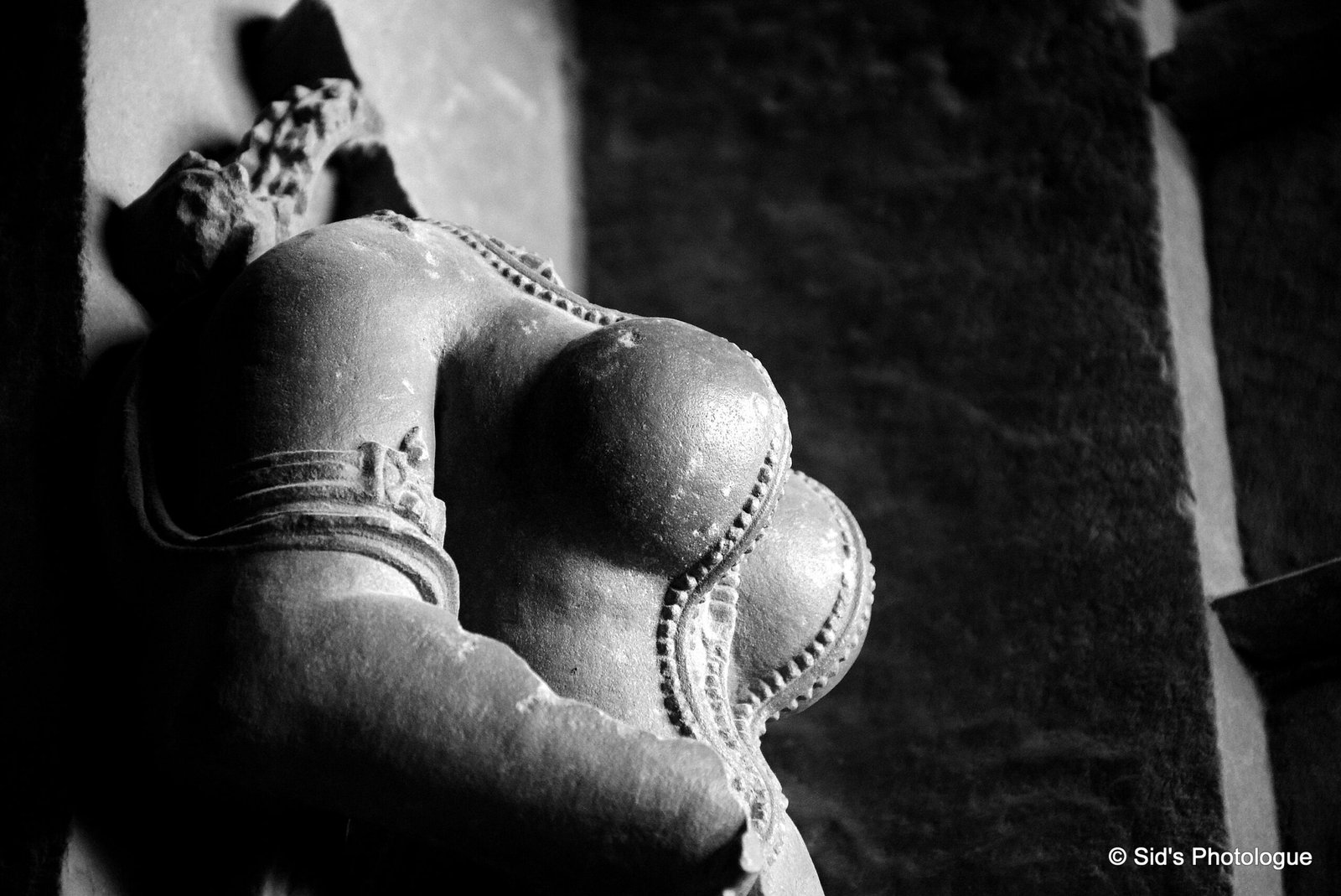
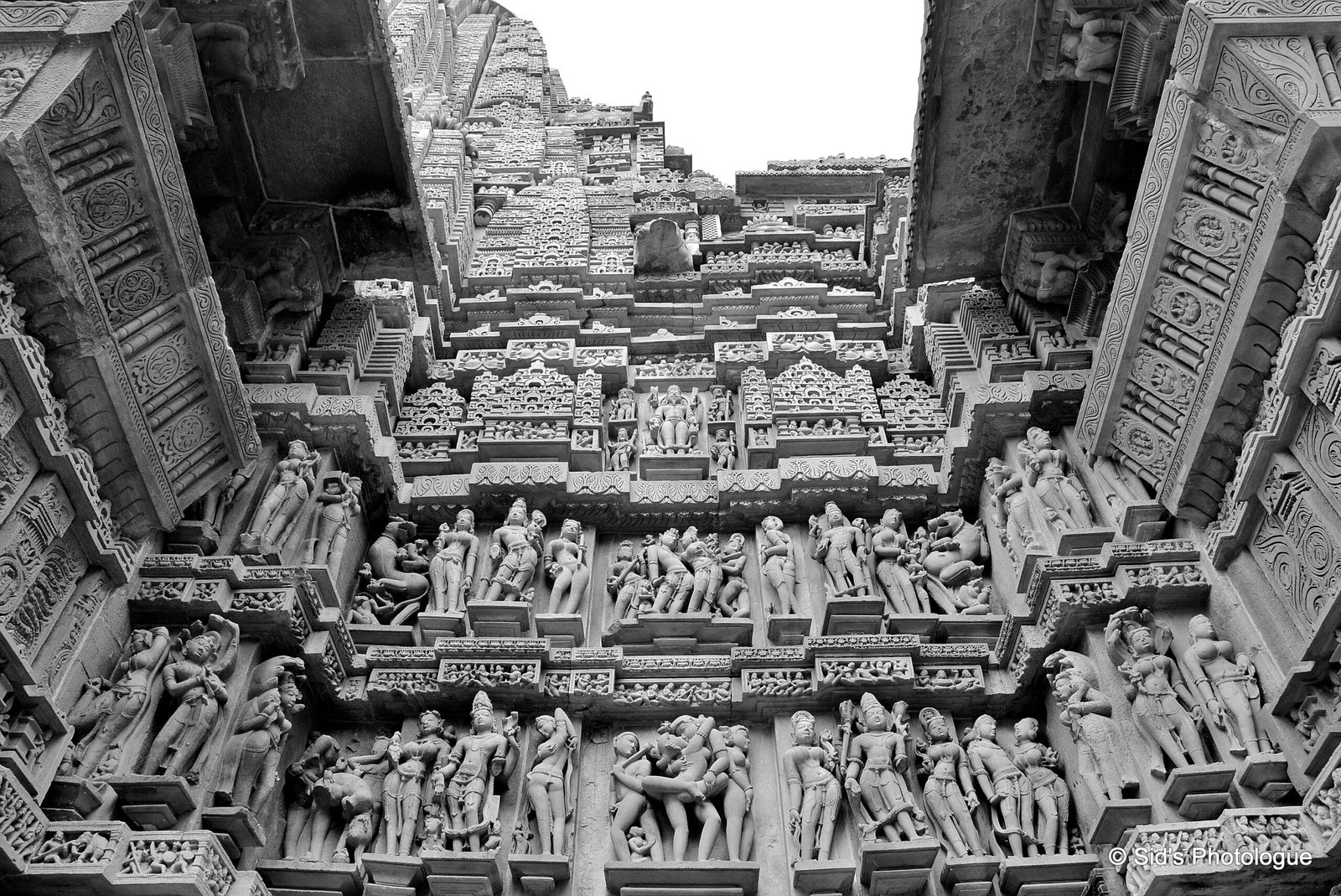
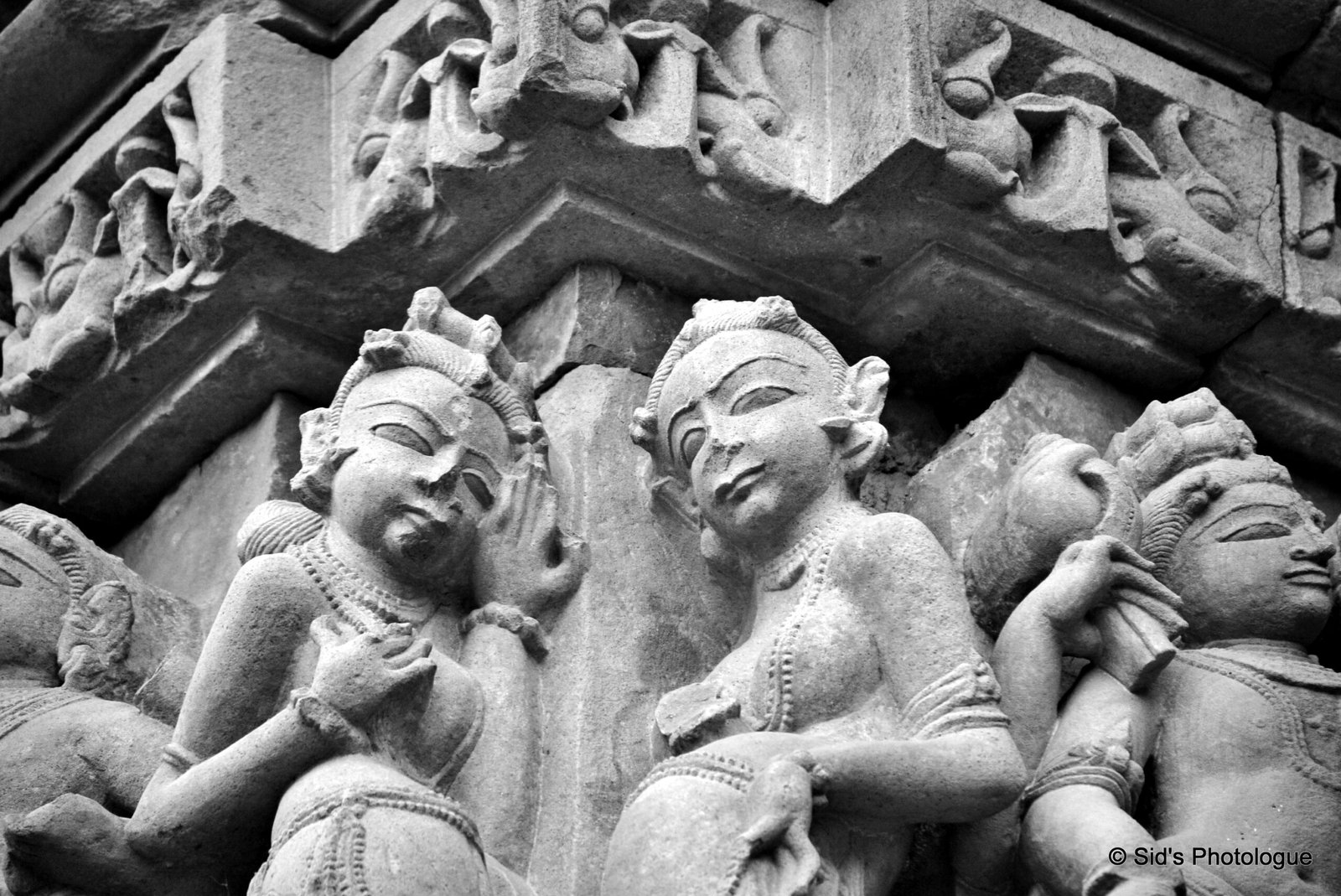
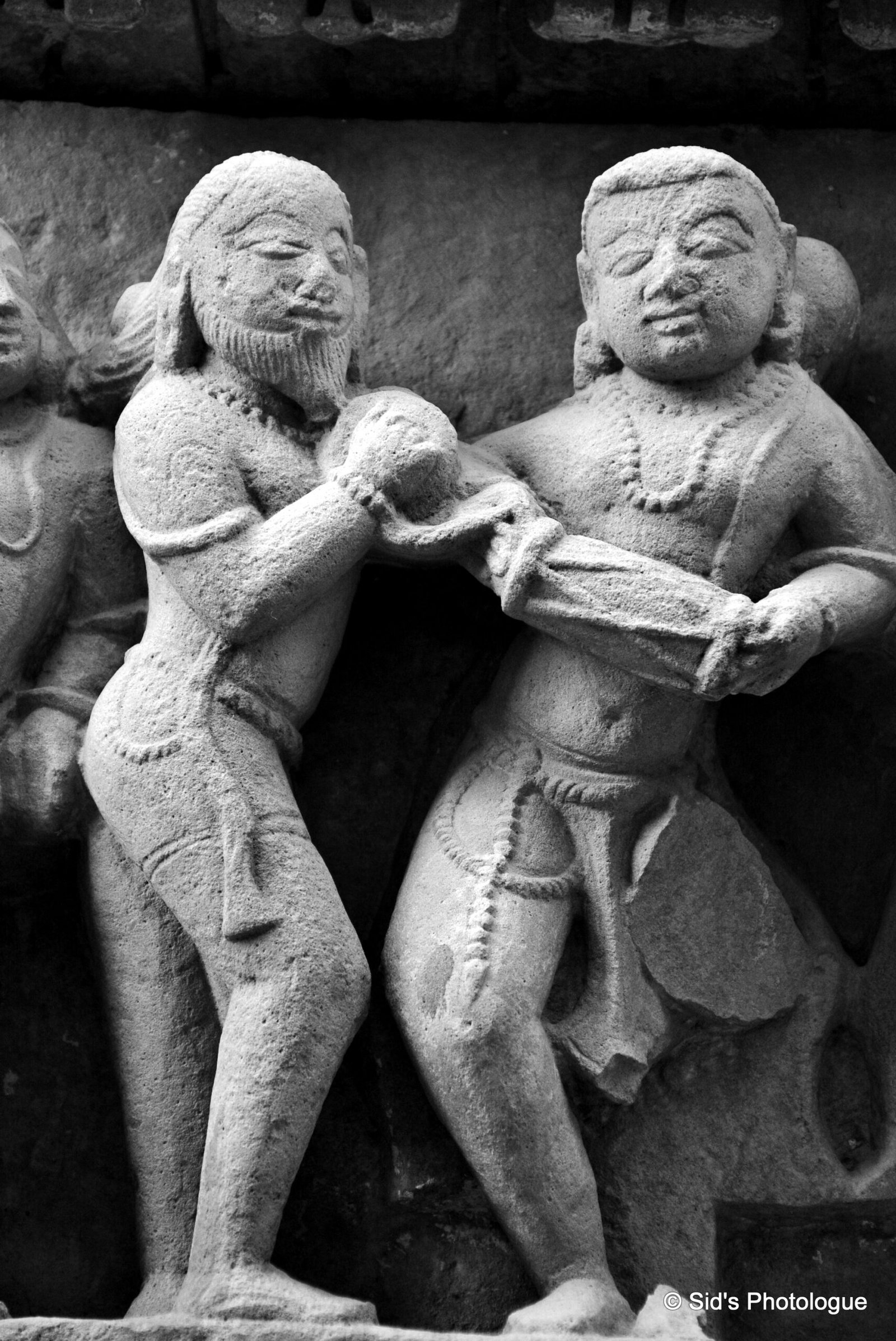
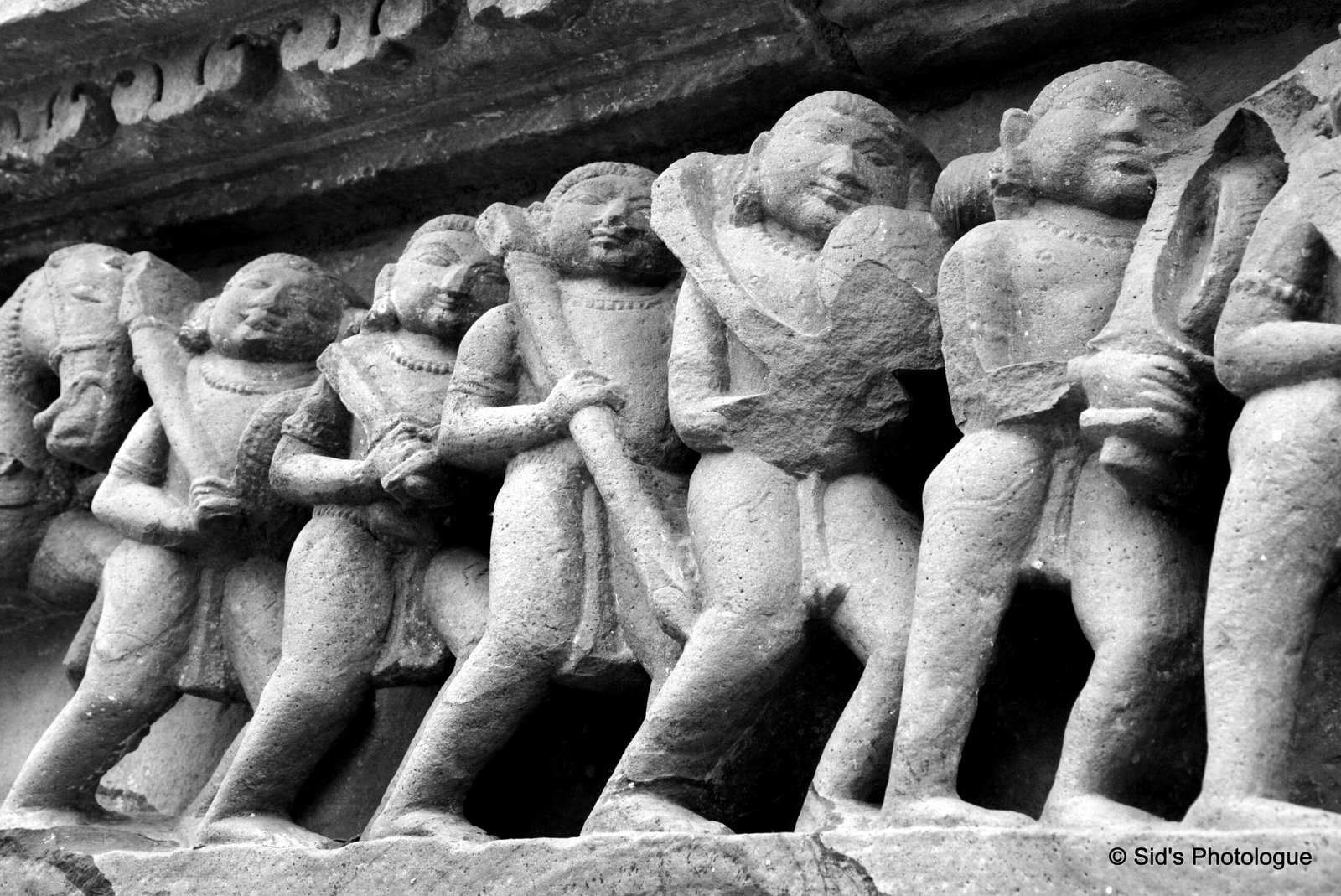
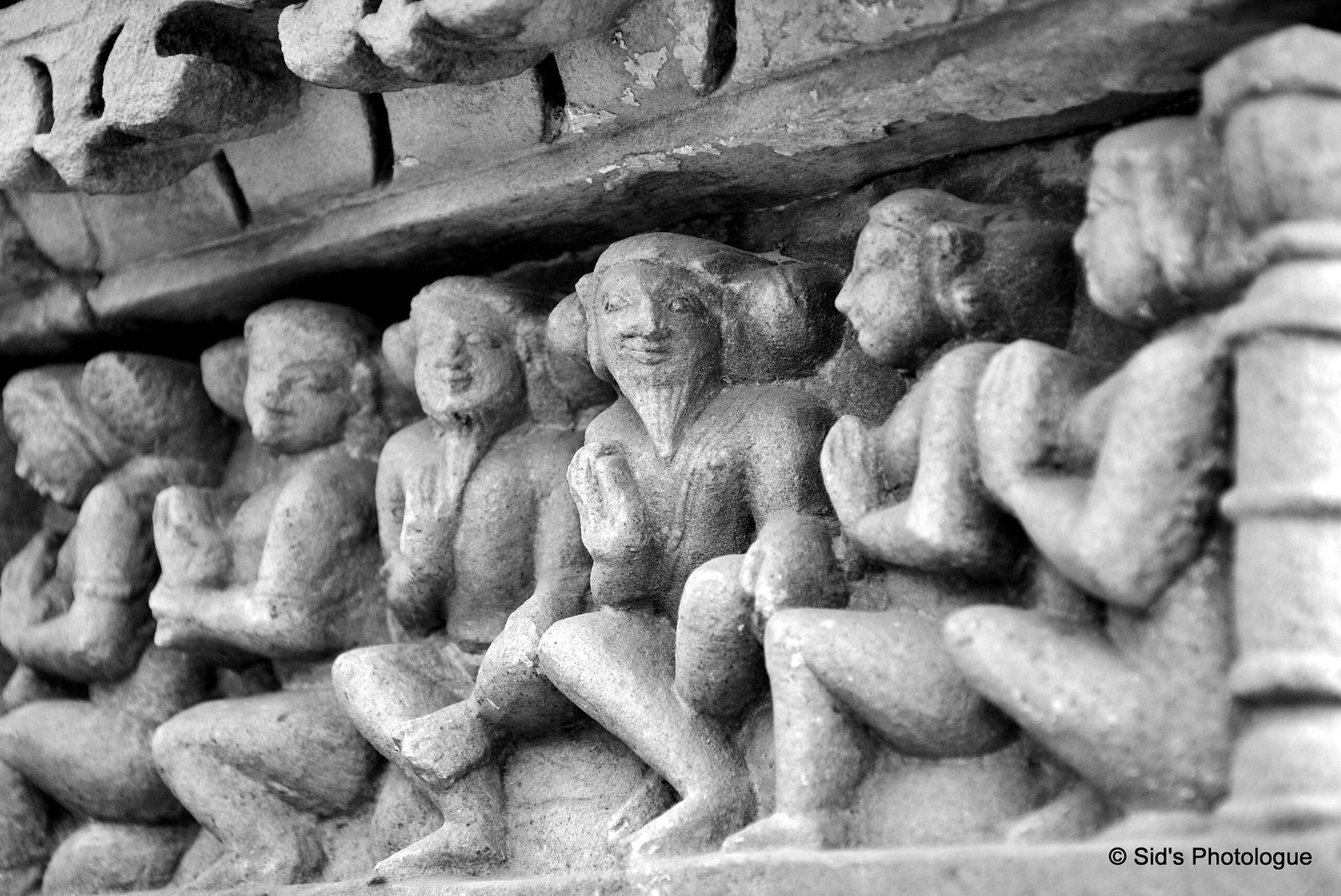
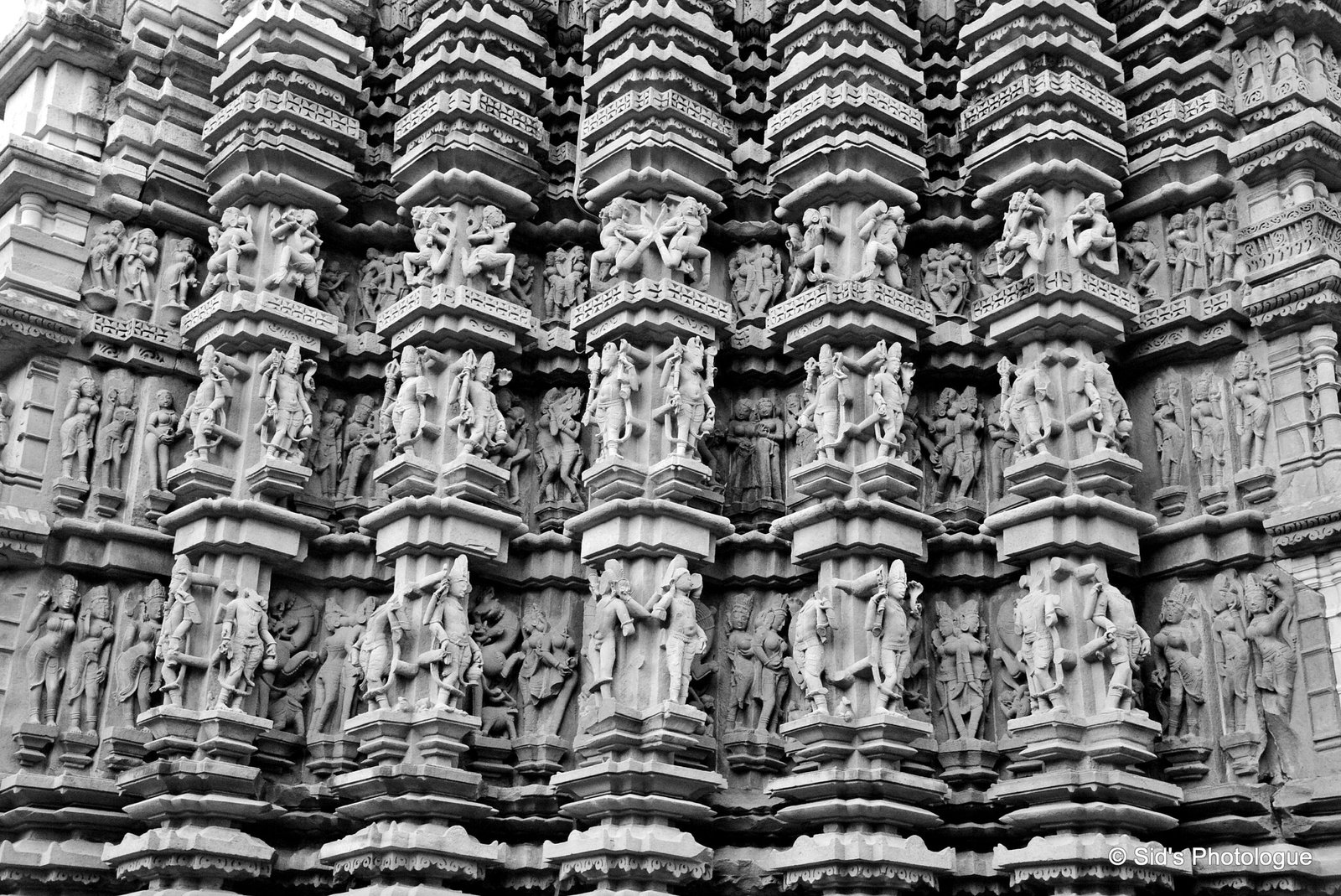
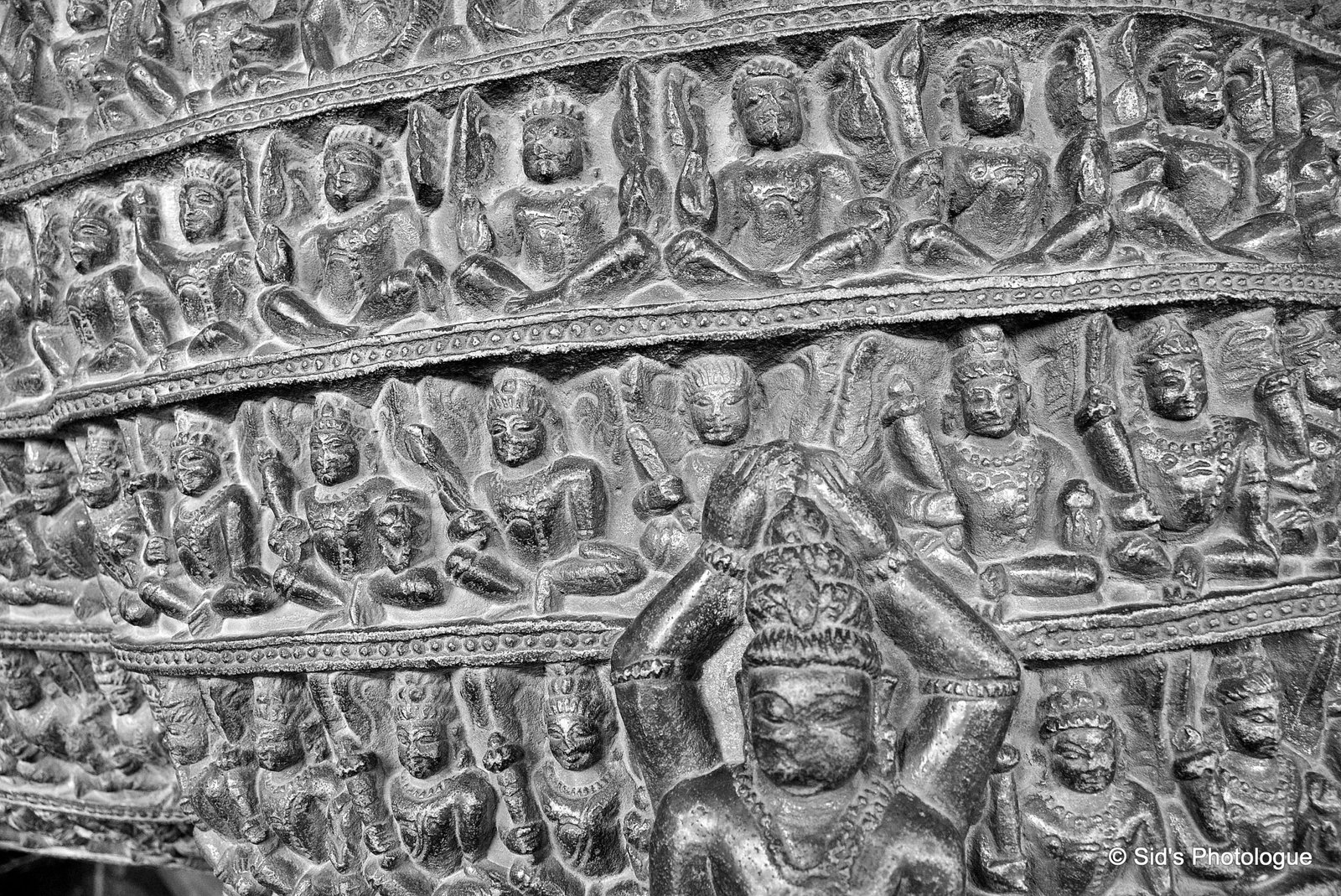
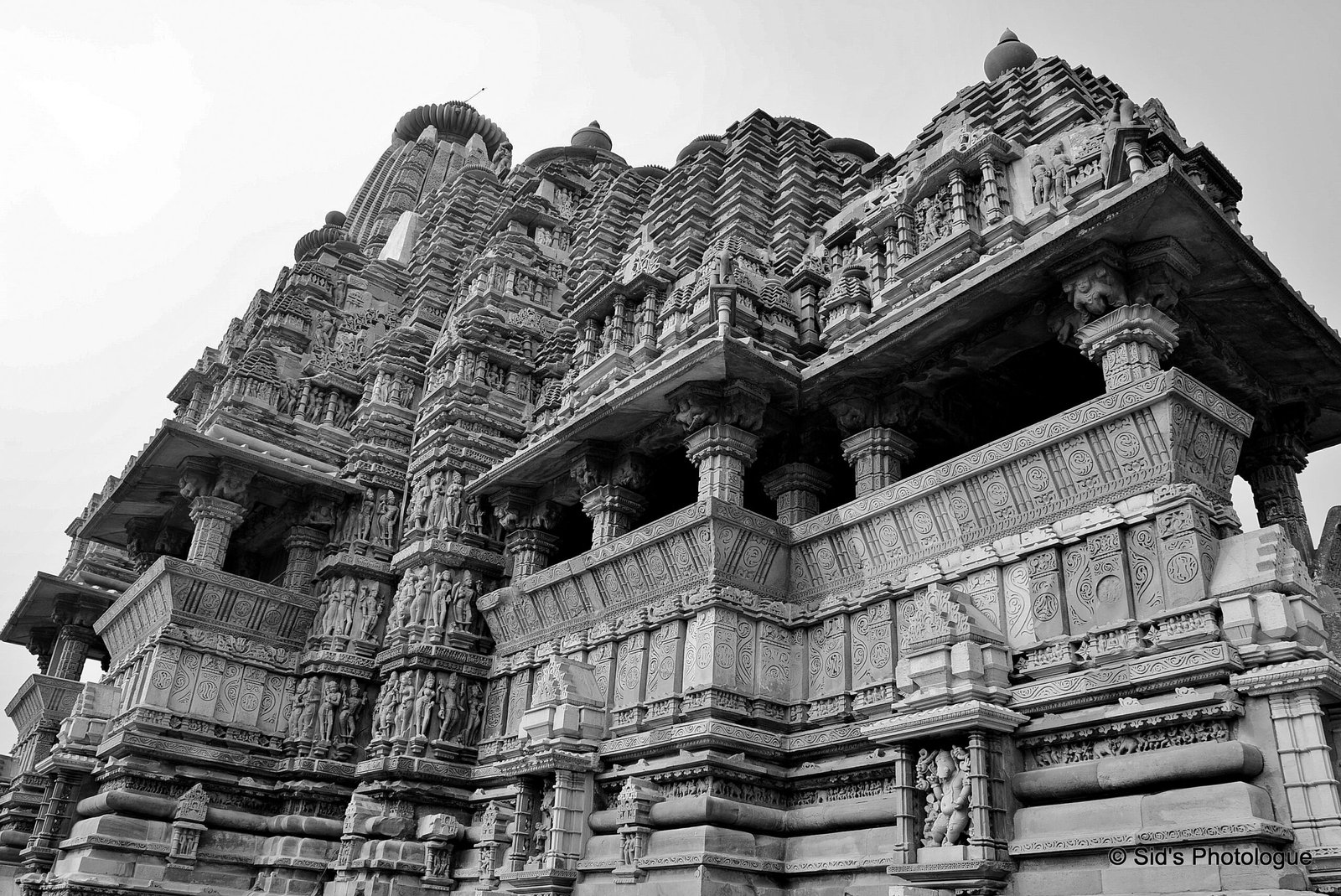
…..The temples have a rich display of intricately carved statues…..
While they are famous for their erotic sculpture, sexual themes cover less than 10% of the temple sculpture……
….. Further, most erotic scene panels are neither prominent nor emphasized at the expense of the rest, rather they are in proportional balance with the non-sexual images…..
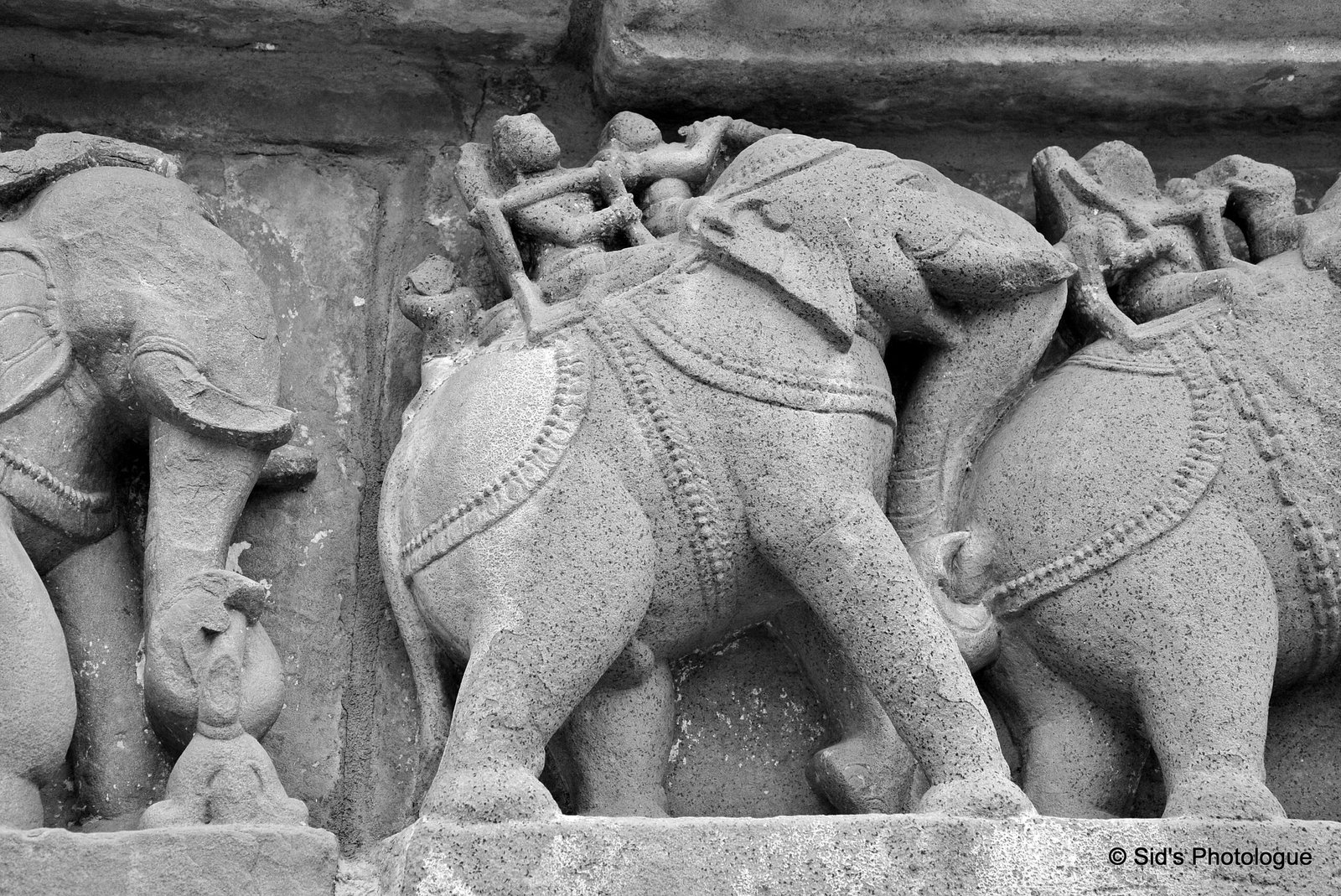
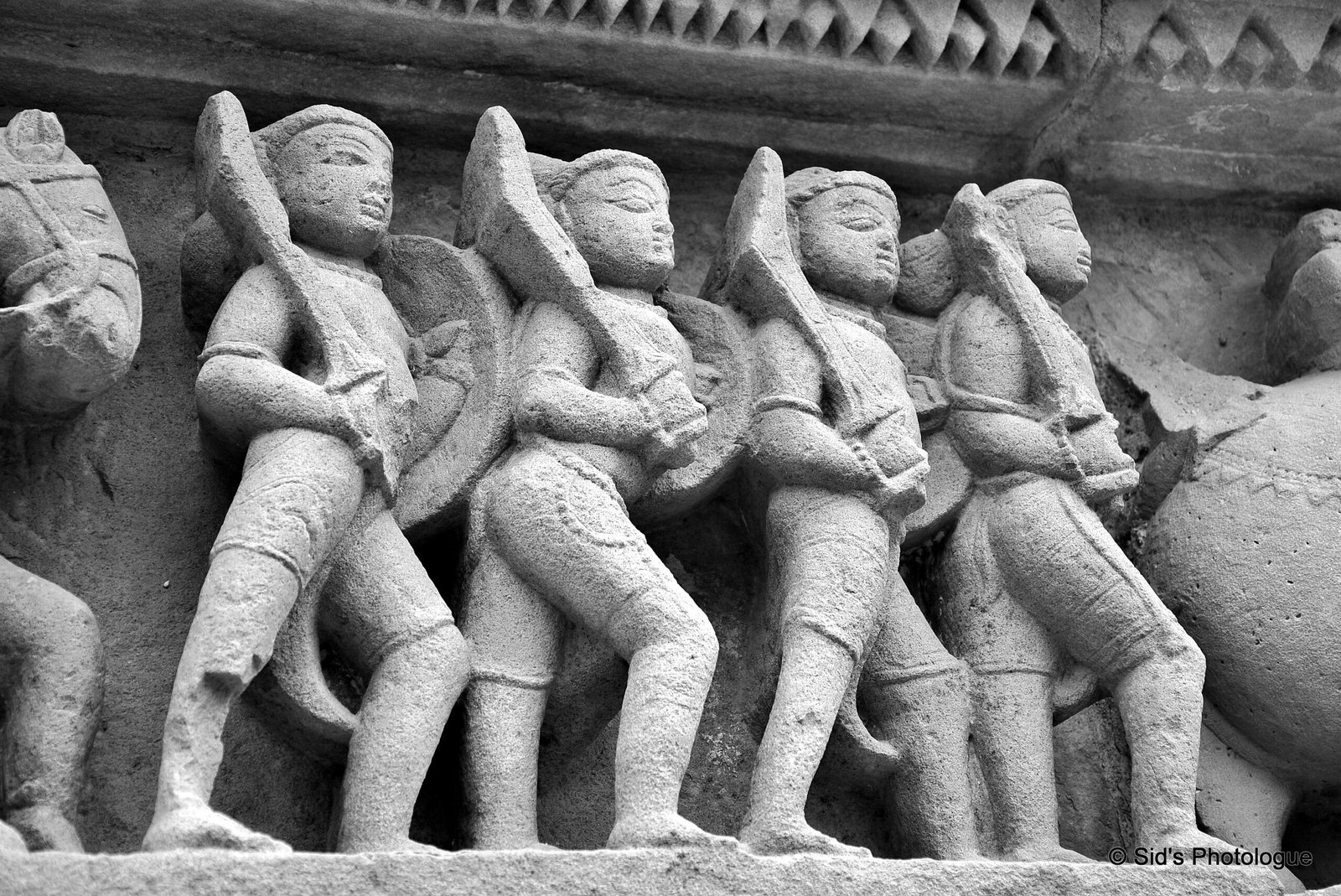
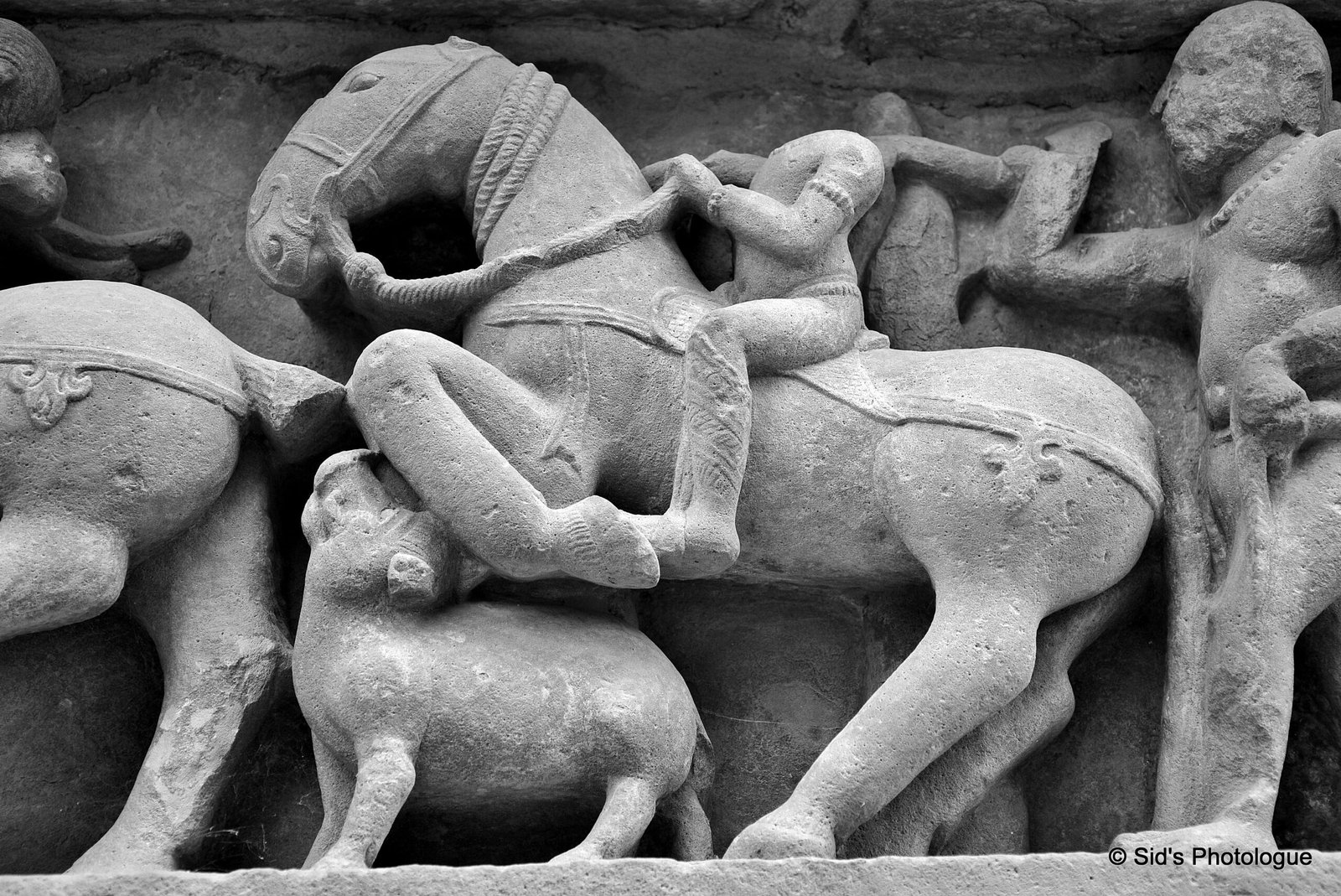
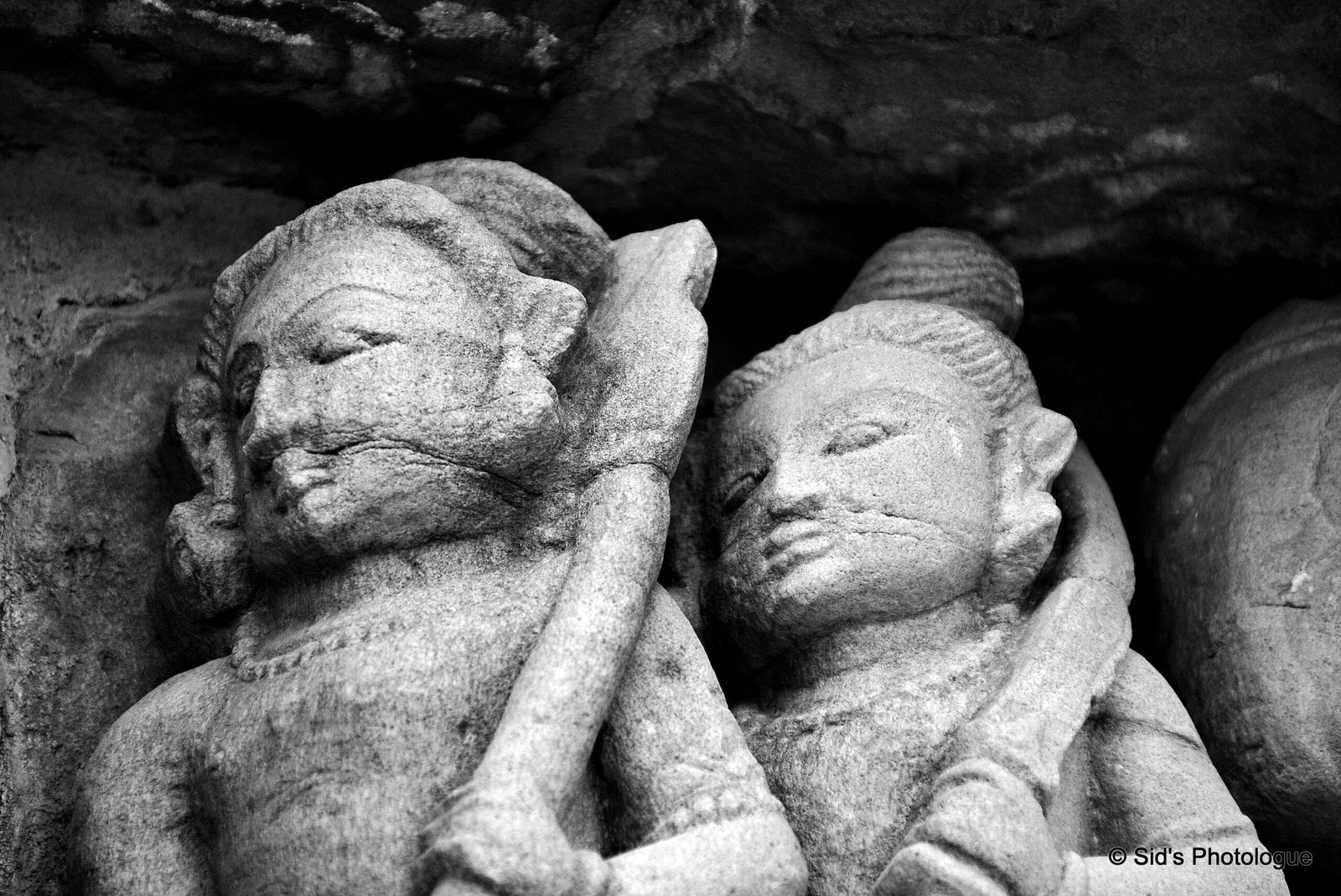
The arts cover numerous aspects of routine life and values considered important in Hindu pantheo…..
…. like, construction work….
festivity……
wars…..
child bearing…..
dance & music….
Farming….
& preaching !!
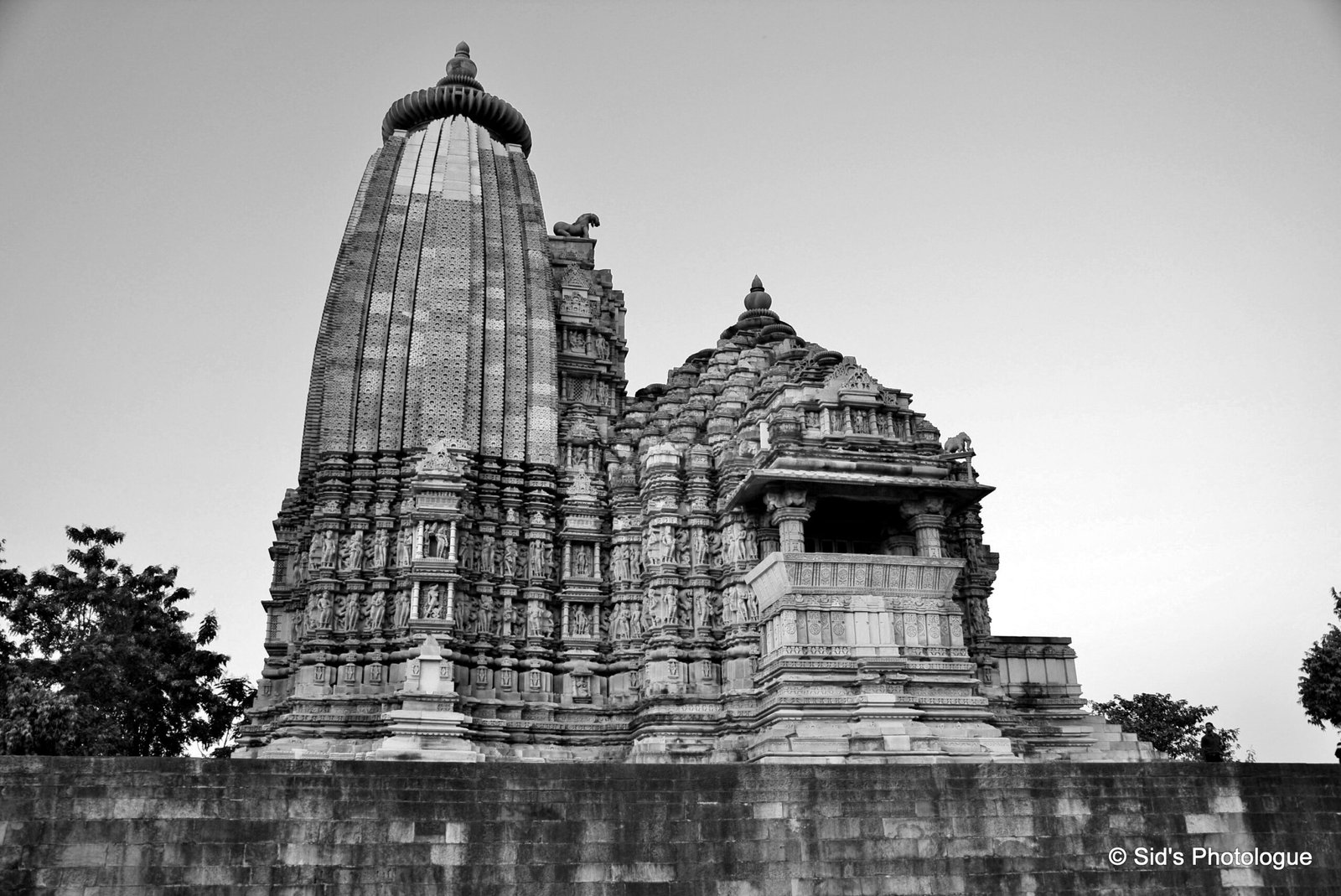
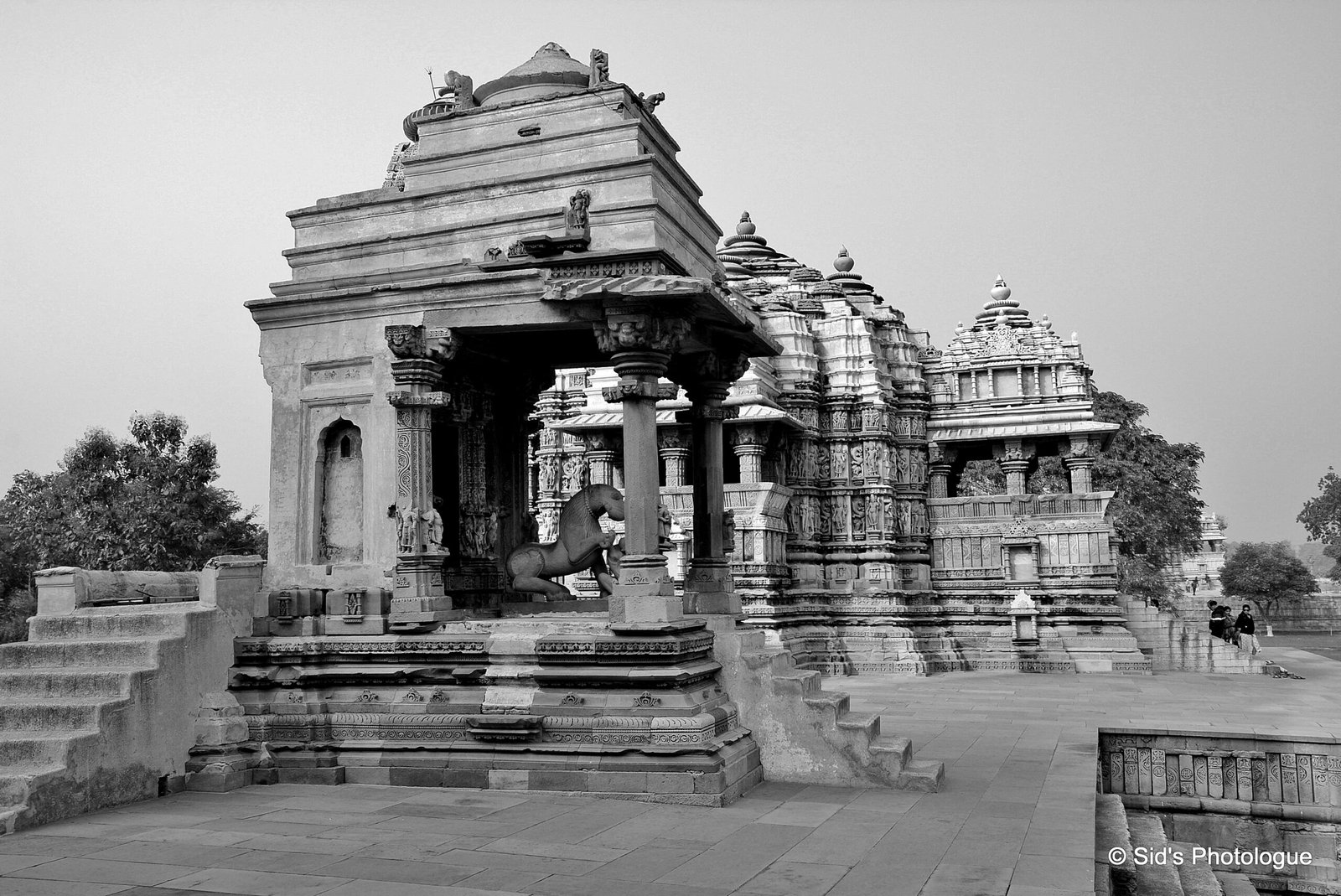
Vaman temple is a Hindu temple dedicated to Vaman, an avatar of the Lord Vishnu….
The outer walls of the temple has two bands of sculptures which includes graceful figures of sura-sundaris….
….while the idol of Vaman adorns the niches of sanctum !
Idol of Vrishabh…the bull!
The sculpture of the lady pulling out thorn from her foot !
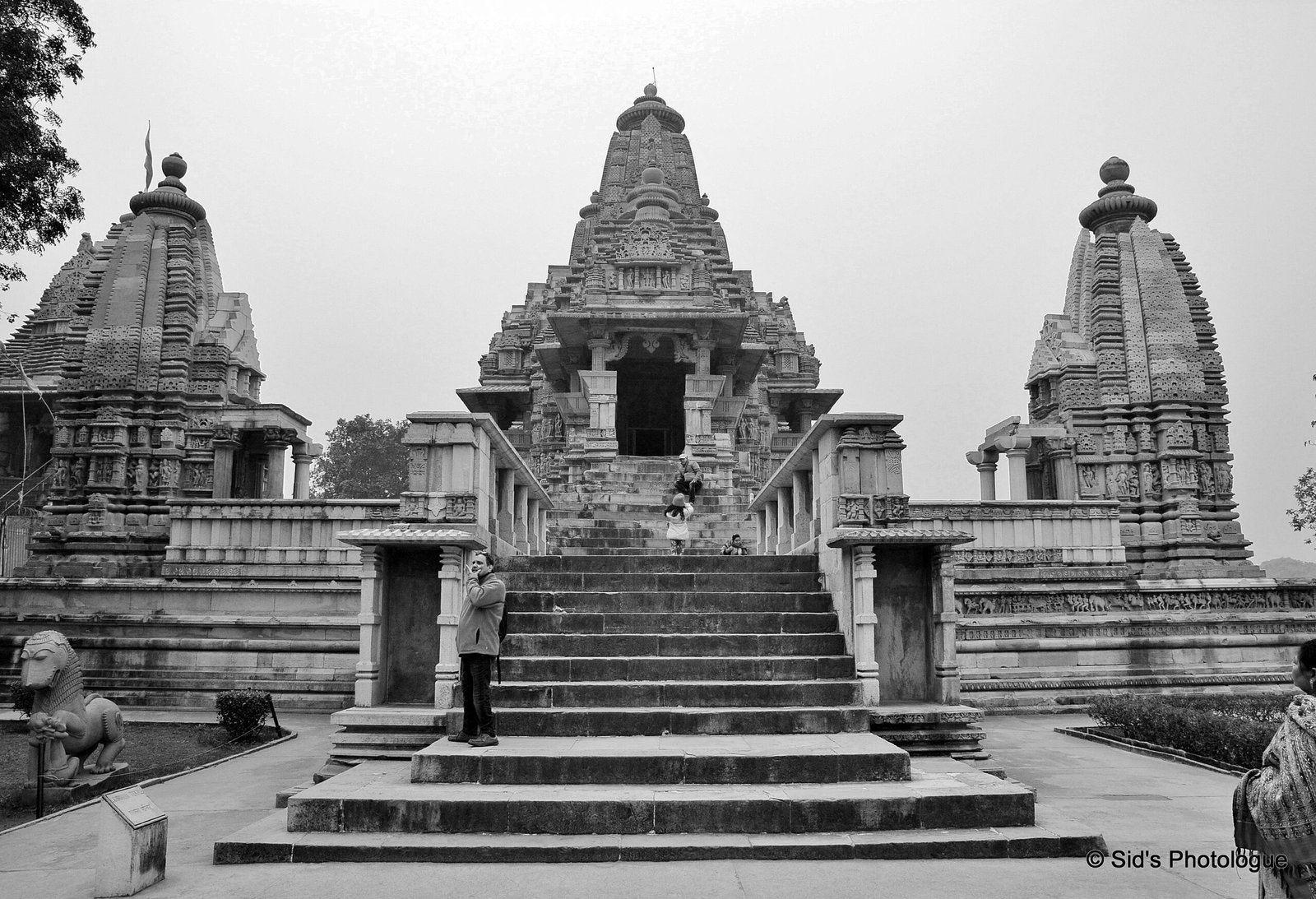
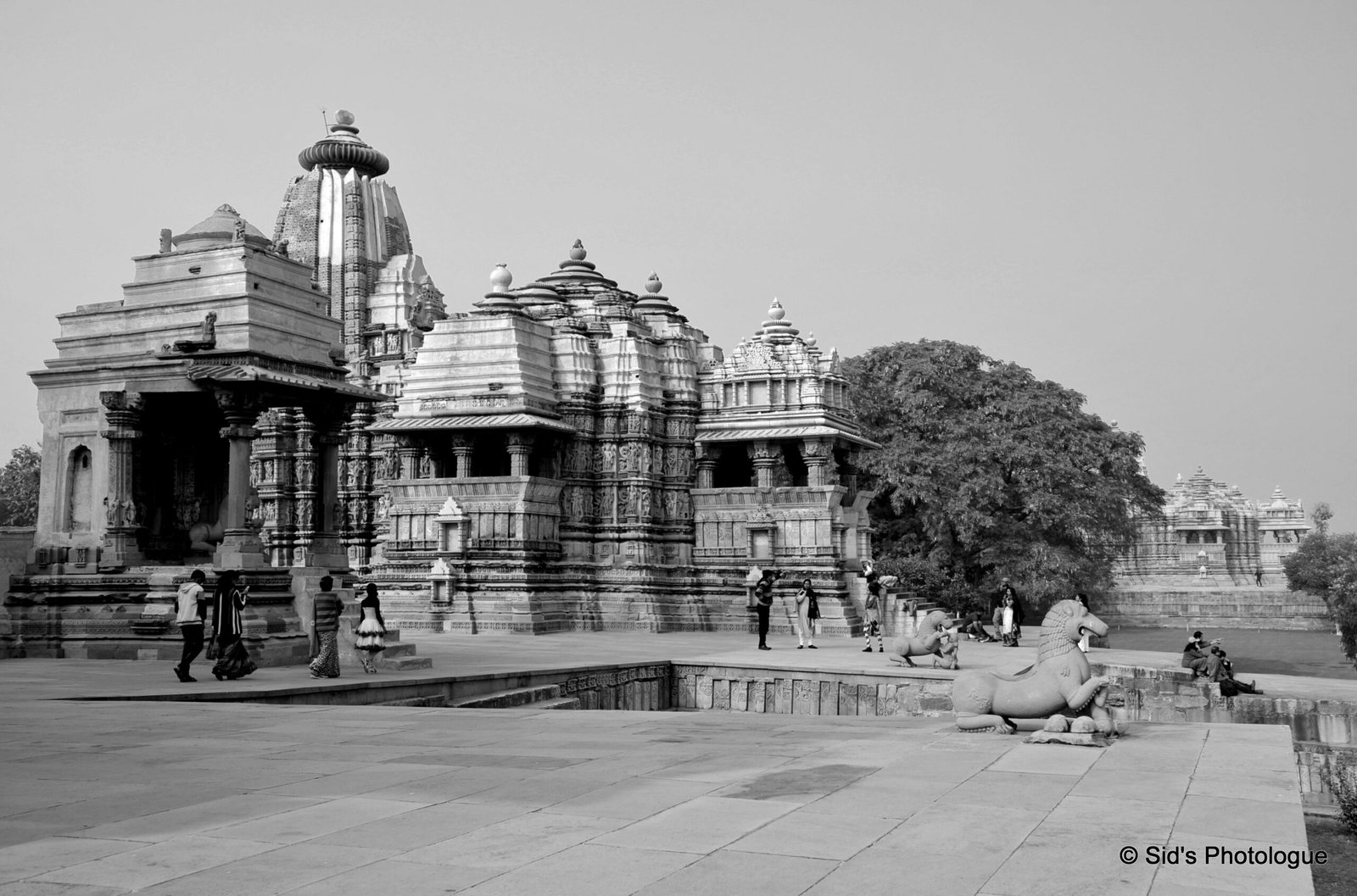
Located at the entrance of the Western group of temples is The Lakshman Temple – temple built by Yashovarman, & dedicated to Vaikunth Vishnu – an aspect of Vishnu
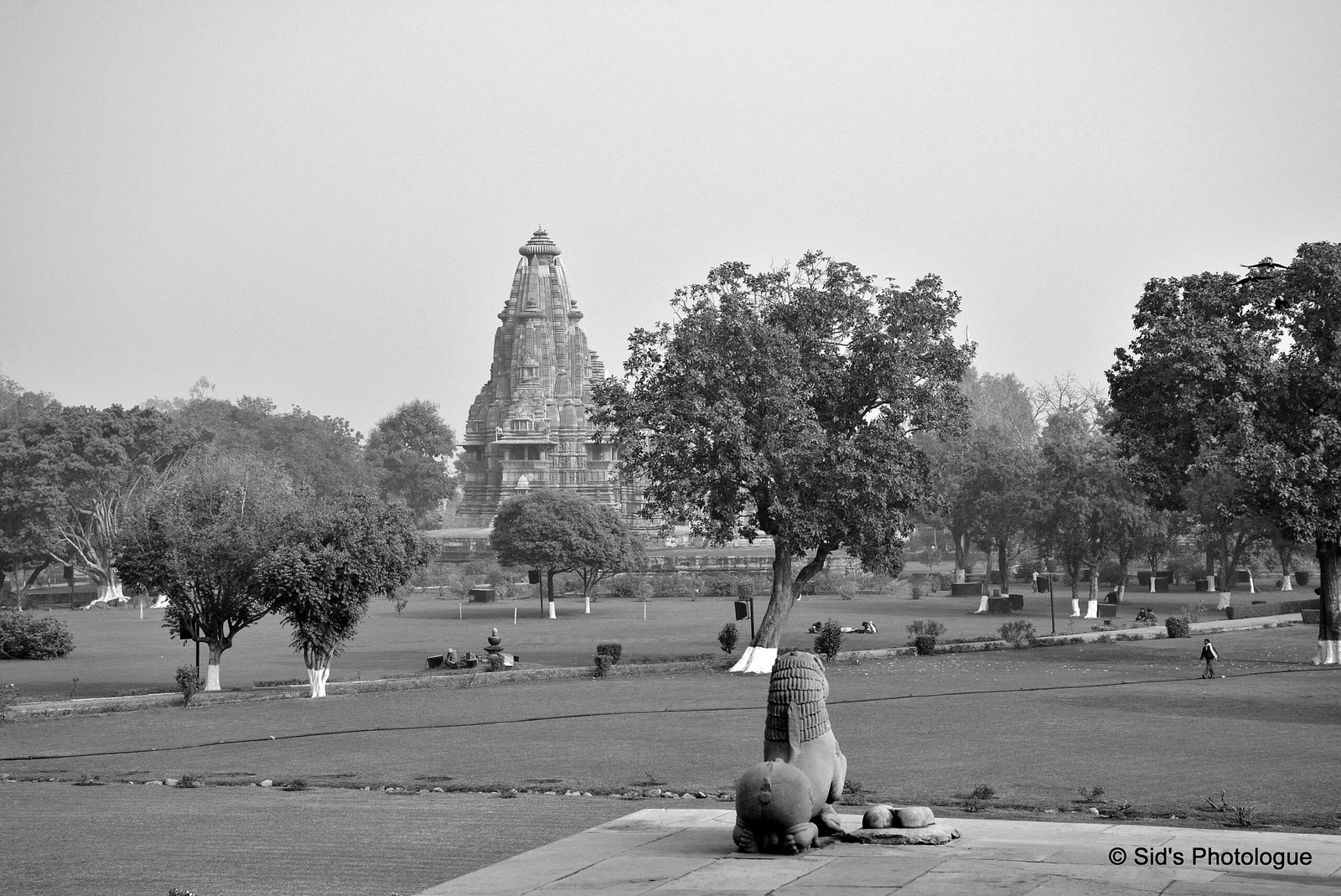
The Varah Temple…
……. is located opposite ot Lakshman temple. It enshrines a colossal monolithic image of Varah, the boar incarnation of Lord Vishnu…..
As the legend goes : Lord Vishnu appeared in the form of a Boar in order to defeat Hiranyaksh, a demon who had taken the Earth (Prithvi) and carried it to the bottom of what is described as the cosmic ocean in the story. The battle between Varah and Hiranyaksh is believed to have lasted for a thousand years, which the former finally won. Varah carried the Earth out of the ocean between his tusks and restored it to its place in the universe. Vishnu married Prithvi (Bhudevi) in this avatar. The Varah Purana is a Purana in which the form of narration is sculpted on the idol of Varah.
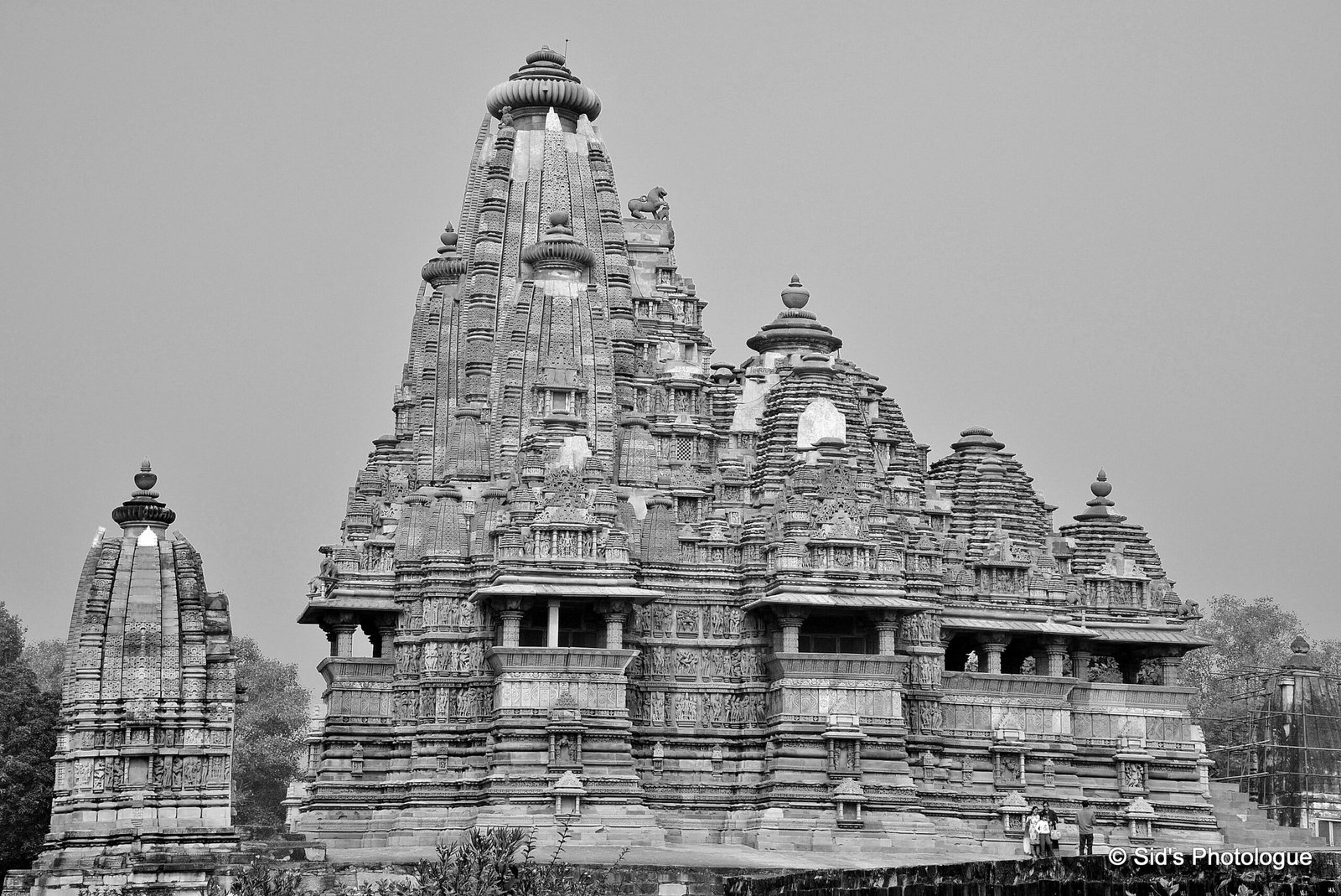
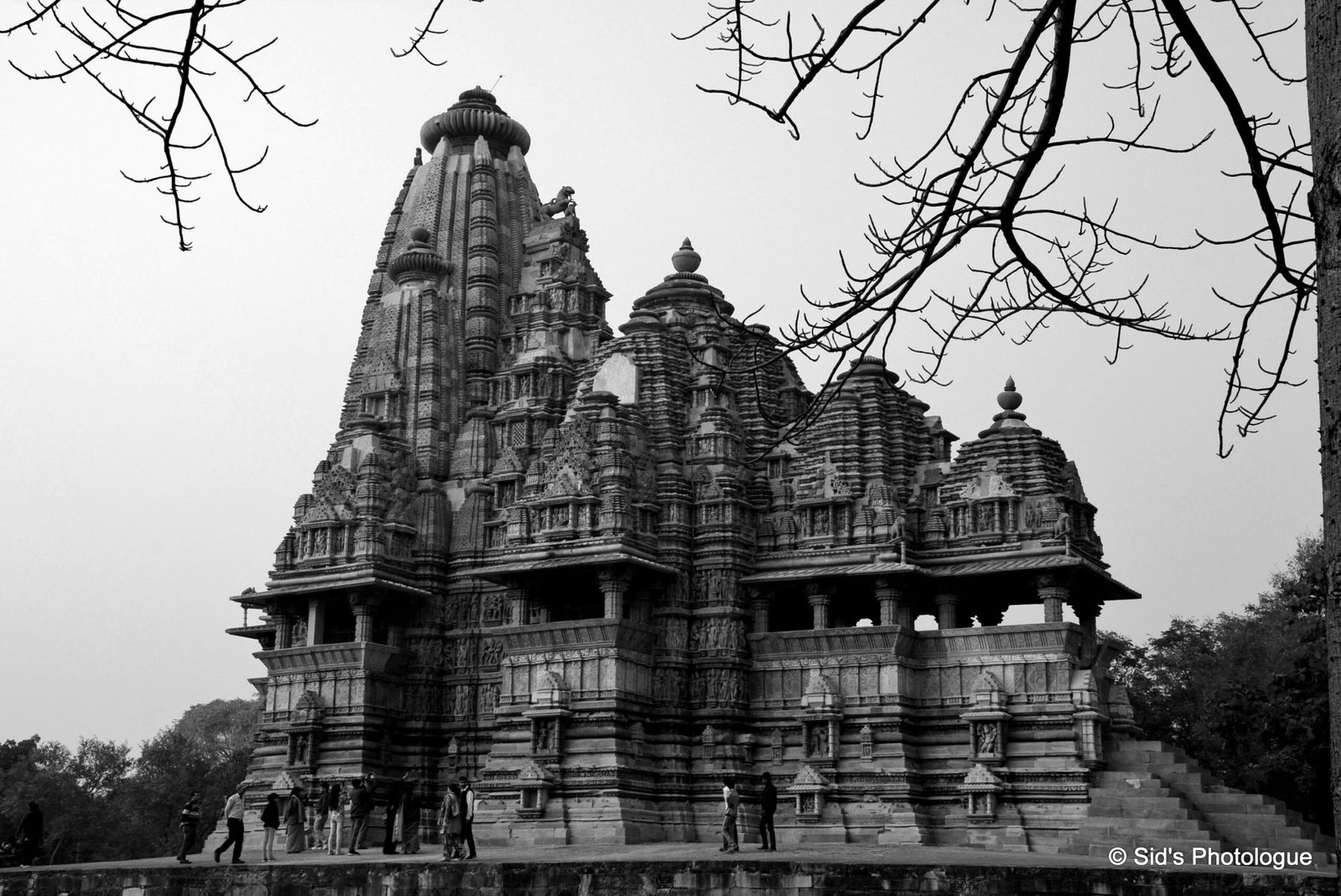
The Vishvanath Temple is dedicated to Shiva, who is also known as “Vishvanath”, meaning “Lord of the Universe”….
The temple is believed to have been commissioned by the Chandela king Dhanga, and was probably completed in 999 CE or 1002 CE. Its architectural style is similar to that of the older Lakshman Temple and the newer Kandariya Mahadev Temple. It features several sculptures of various deities, surasundaris (celestial maidens), couples making love, and……
…..the mythical creatures called ‘Shardul’
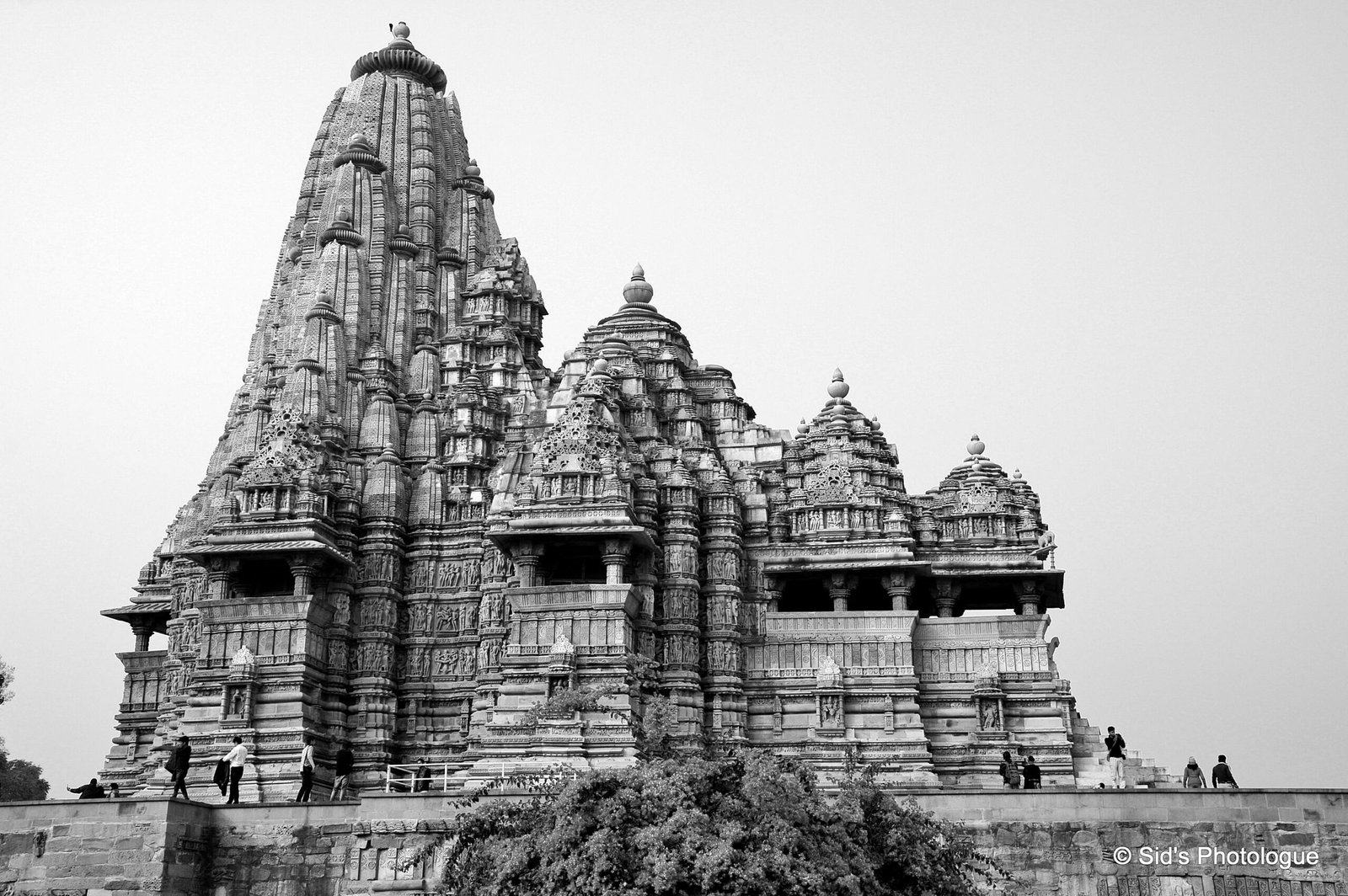
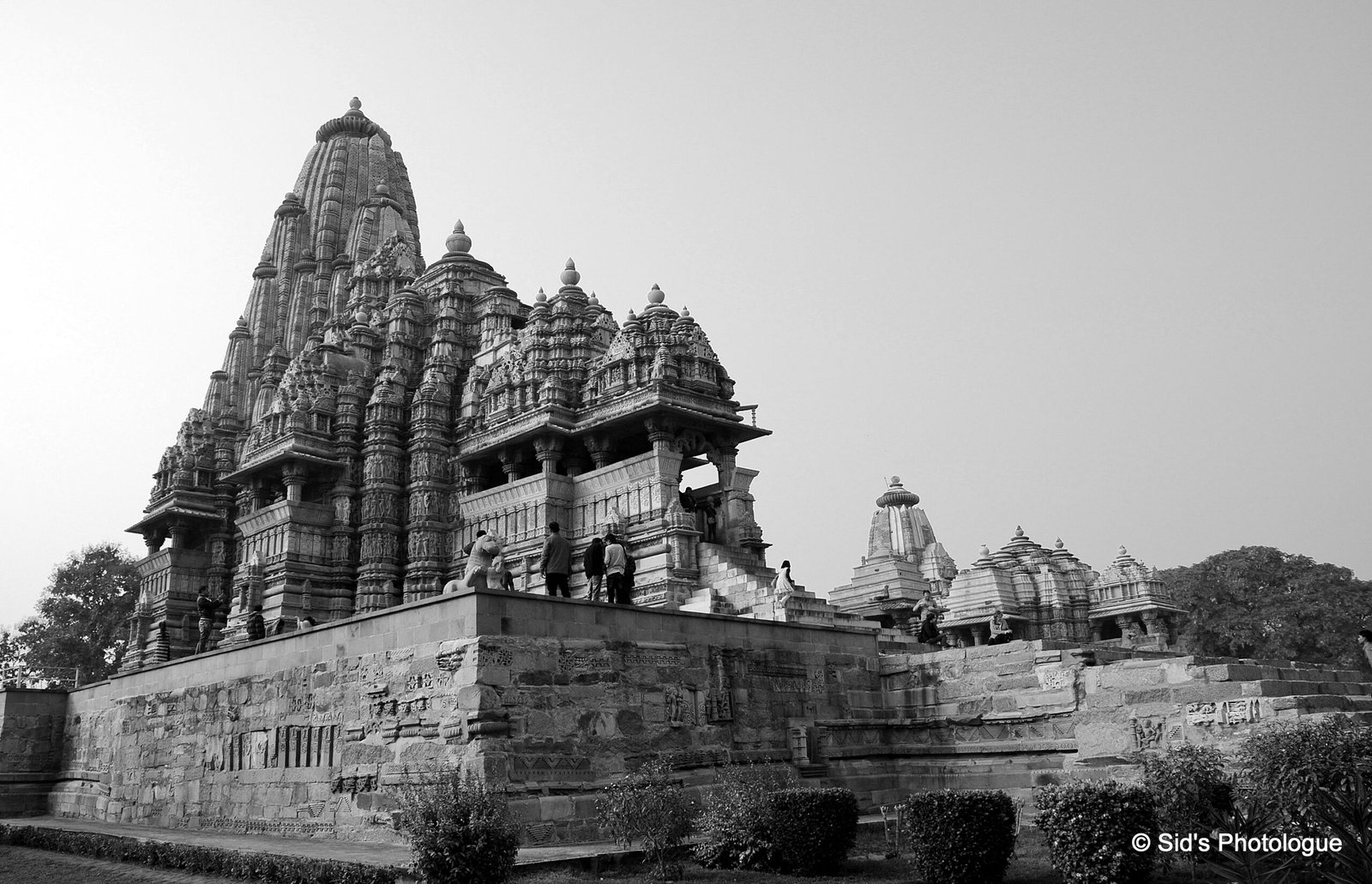
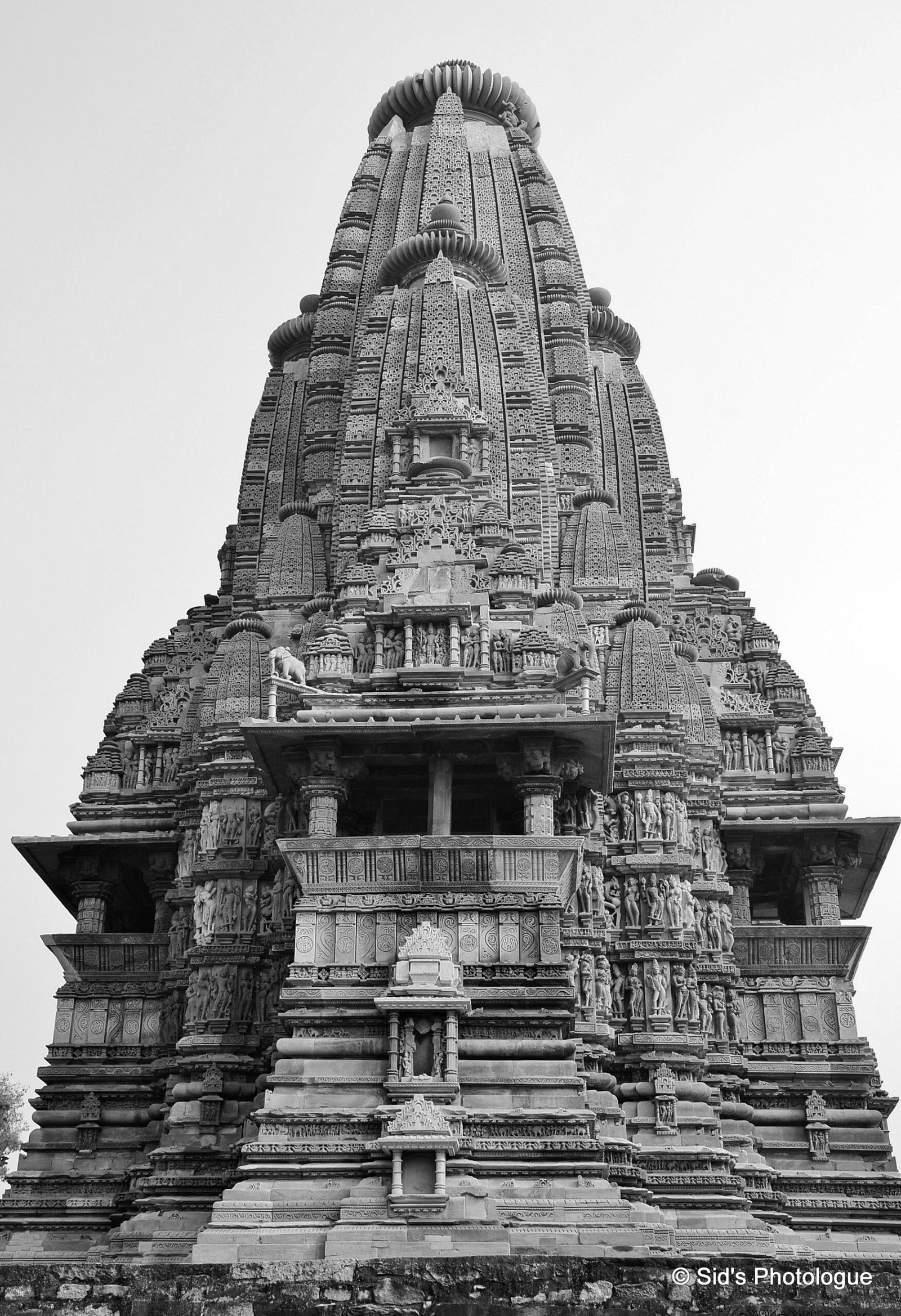
The Kandariya Mahadev Temple, meaning “the Great God of the Cave”, is the largest and most ornate Hindu temple in this medieval temple group…..
Founded on a massive plinth of 4 metres height……
…… the Kandariya Mahadev Temple is a total 31 metres (102 ft) in height – making it the largest among the three groups of the Khajuraho complex of temples. The 3 temples in this western group – the Kandariya, Matangeshwar and Vishvanath temples, is compared to a “cosmic design” representing the three forms of Shiva. The temple architecture is an assemblage of porches and towers which terminates in a shikhara or spire, a feature which was common from the 10th century onwards in the temples of Central India…..
……The superstructure has richly decorated roofs which rise in a grand form terminating in the shikara, which has 84 miniature spires.
The temple structure above the plinth is dexterously planned and pleasingly detailed. The superstructure is built in a steep mountain shape or form, symbolic of Mount Meru which is said to be the mythical source of creation of the world……
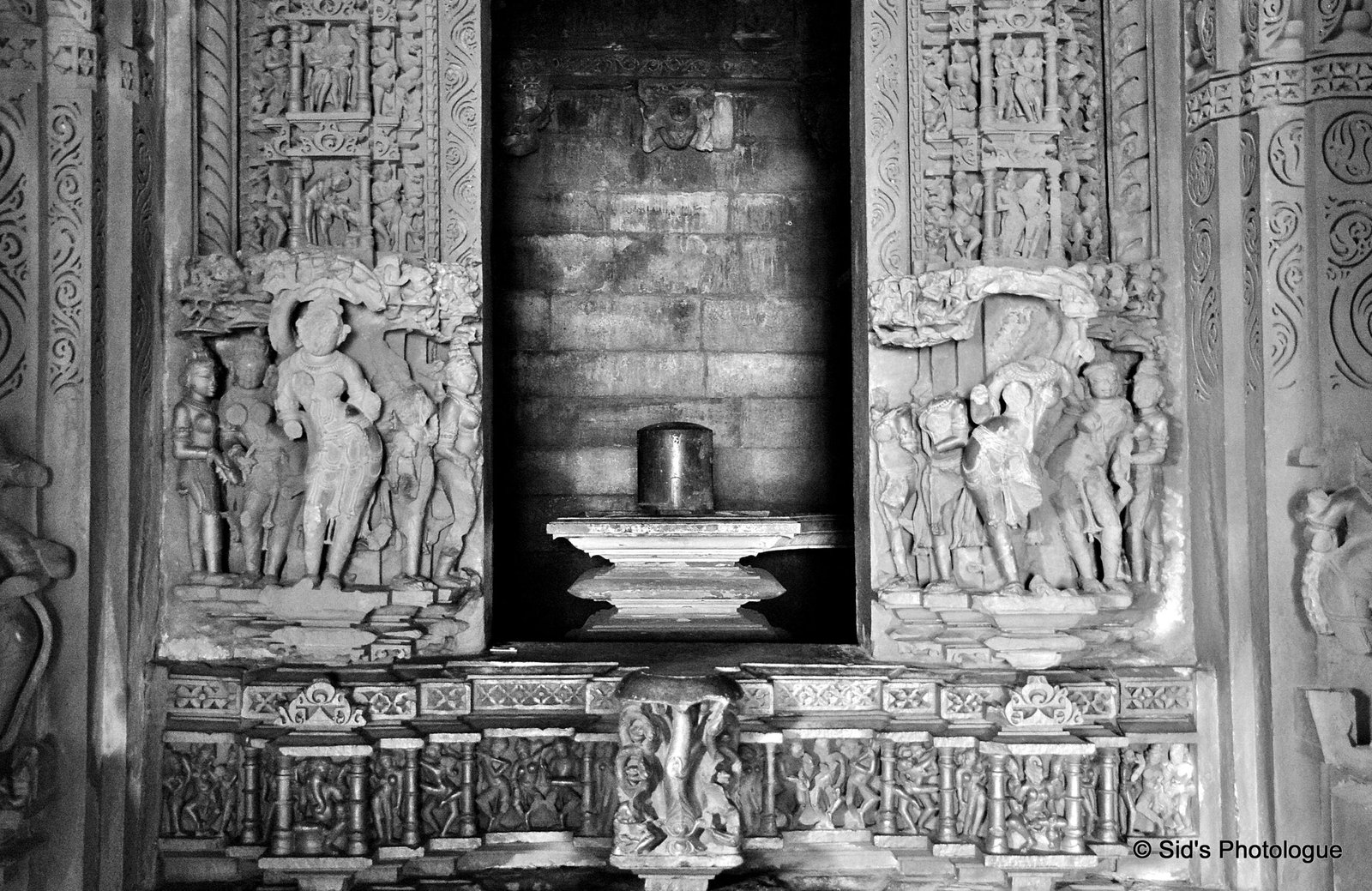
In the interior space from the entrance there are three mandapas or halls, which successively rise in height and width, which is inclusive of a small chamber dedicated to Shiva; a chamber where Shiva’s wife, Parvati is deified, and a central sanctum or garbhagriha (literal meaning “womb chamber”) where the Shiva linga, the phallic emblem of Shiva is deified……
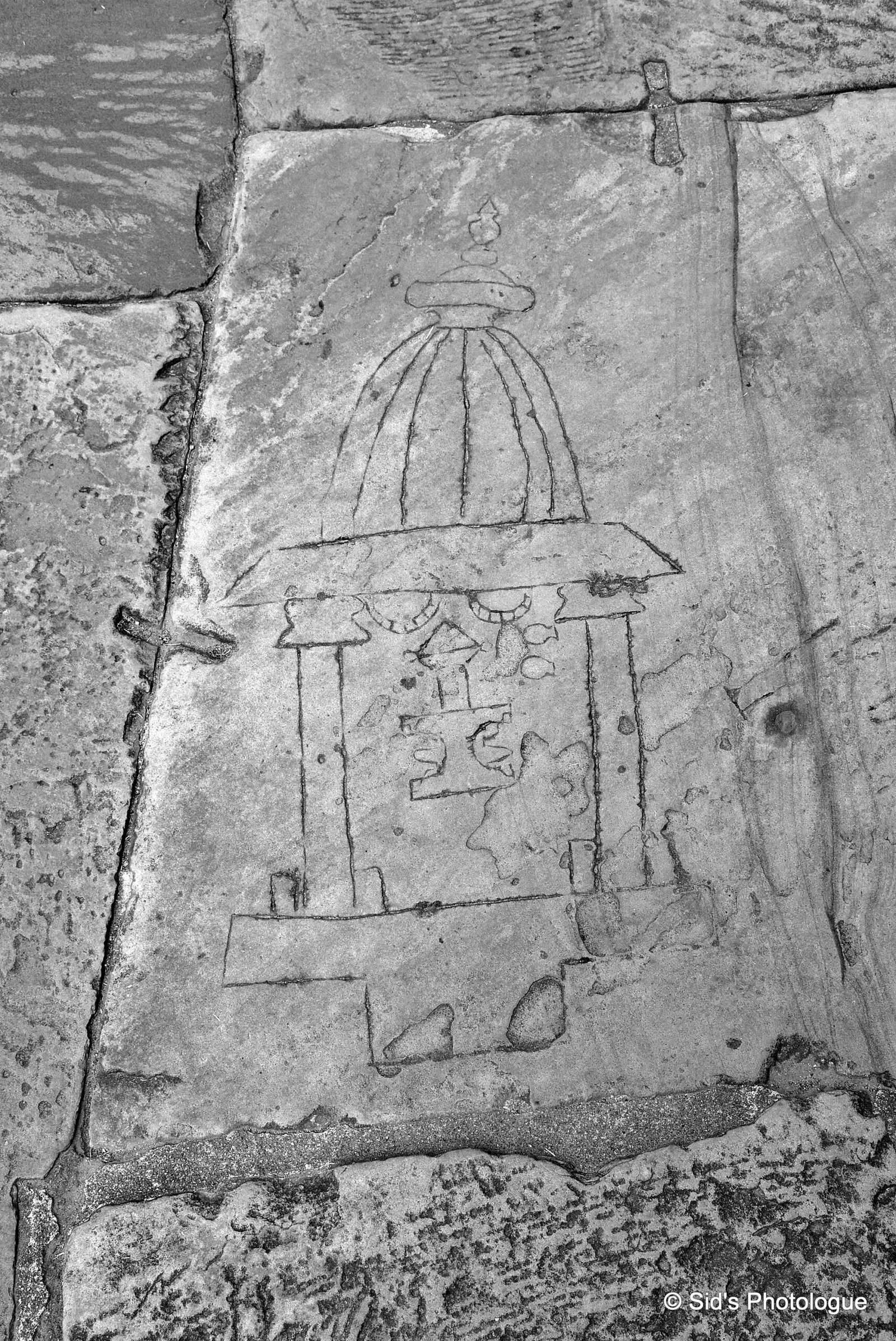
The ancient blue print of the temple!!
The sanctum sanctorum is surrounded by interlinked passages which also have side and front balconies. Due to inadequate natural light in the balconies the sanctum has very little light thus creating a “cave like atmosphere”…..hence the name Kandariya Mahadev !!
Parvati Temple is a temple dedicated to the Goddess Parvati, the wife of Lord Shiva!
The Chitragupta temple is an 11th century temple dedicated to the God Surya (the Sun God)….
The temple’s sanctum has a 2 metres tall statue of Surya riding a chariot of seven horses. He is shown standing, dressed in an armour!
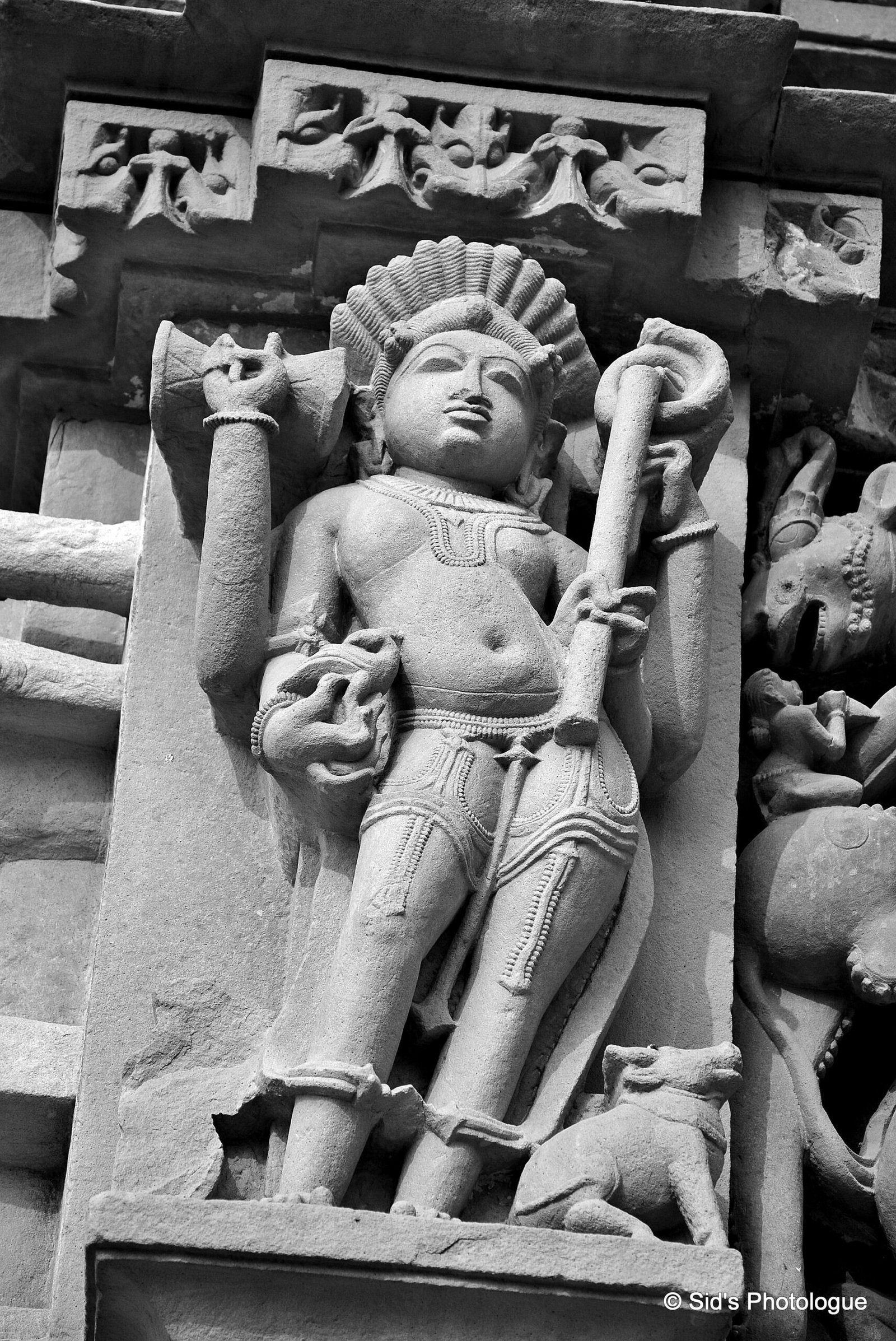
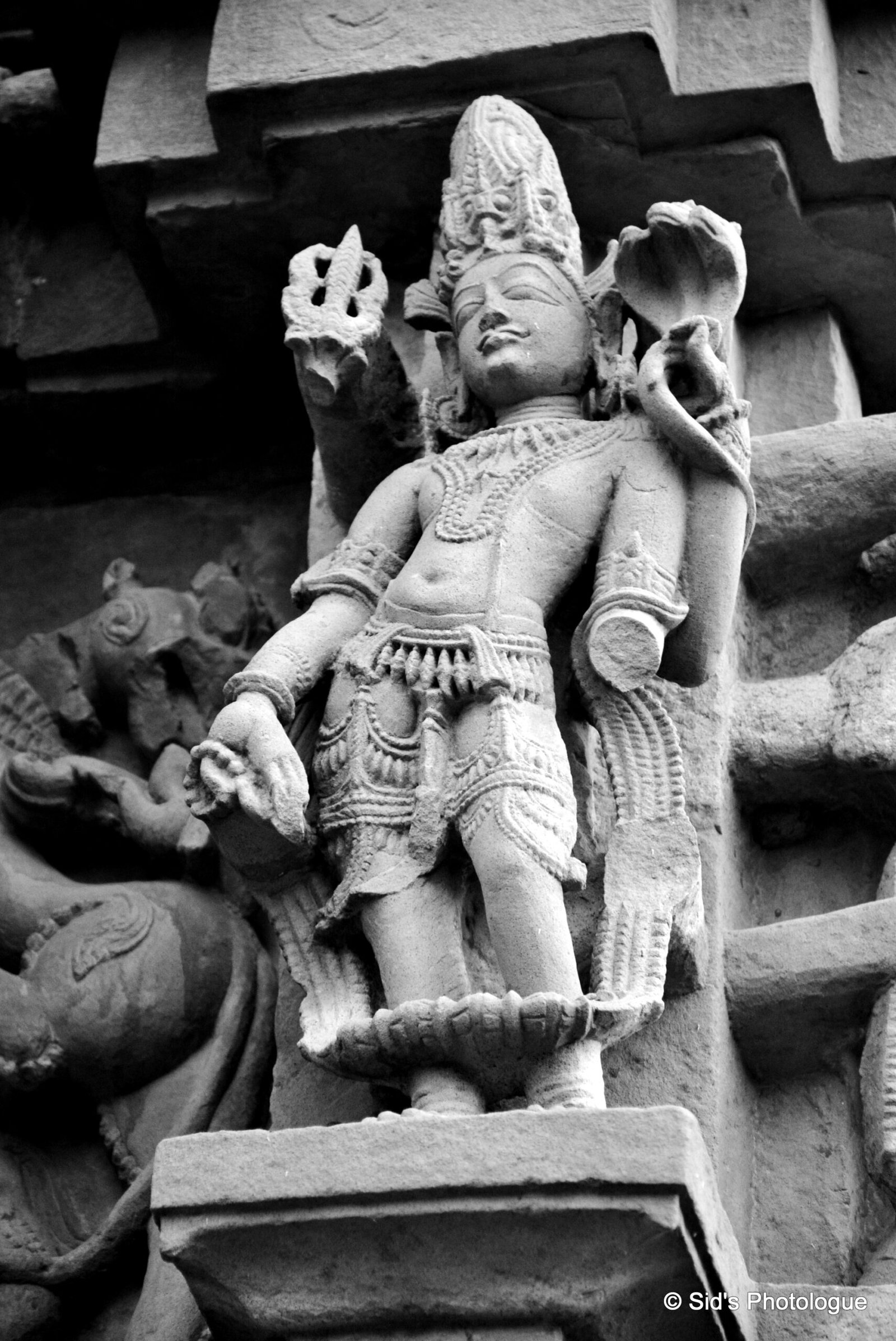
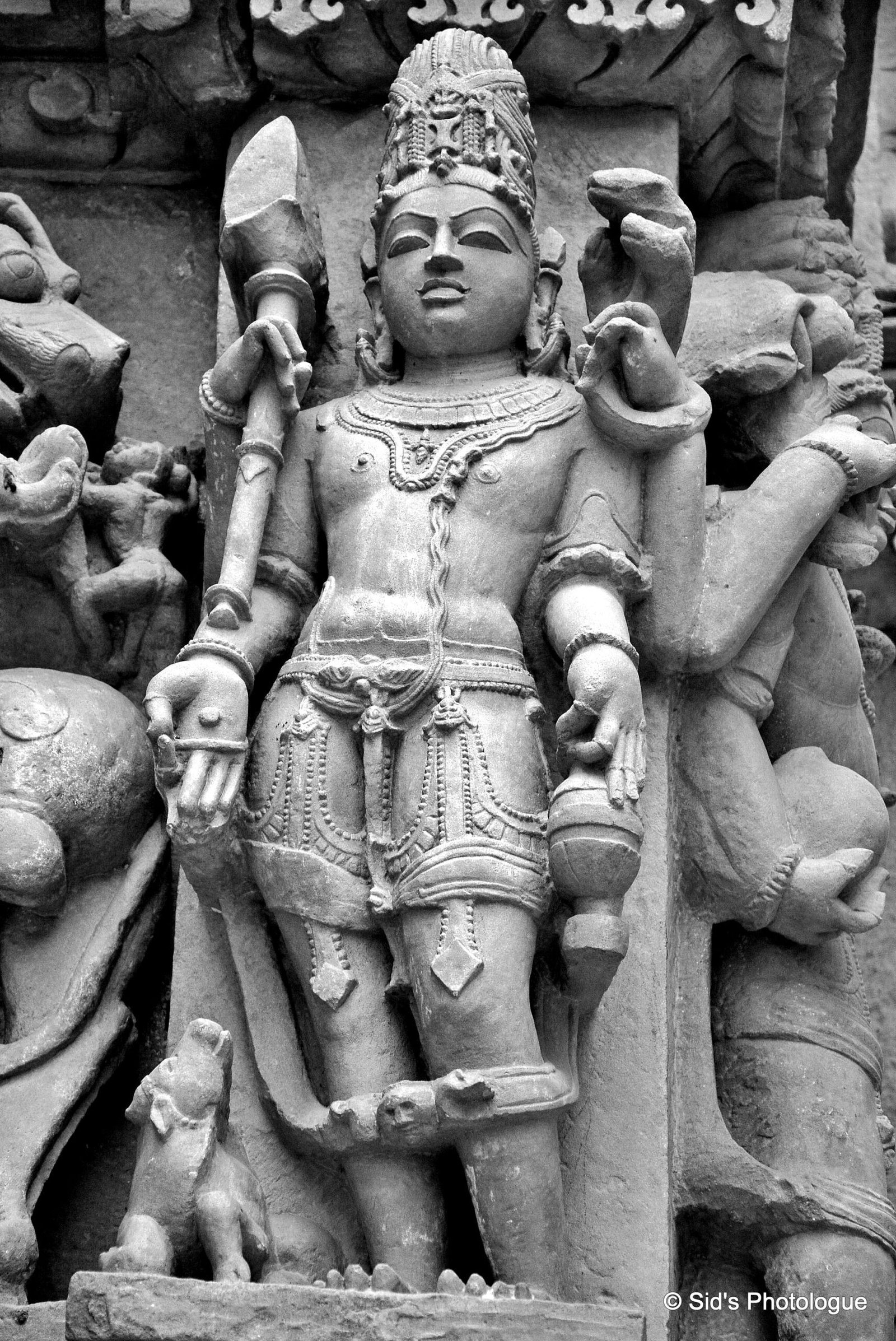
The Khajuraho temples are made of sandstone, with a granite foundation that is almost concealed from view. The constructors didn’t use mortar. The stones were put together with mortise and tenon joints and they were held in place by gravity. This form of construction requires very precise artistry…..
The columns and architraves were built with megaliths that weighed up to 20 tons…..
The Khajuraho and Kalinjar region is home to superior quality of sandstone, which can be precision carved…..
The surviving sculpture reflect fine details such as strands of hair, manicured nails and intricate jewelry !!
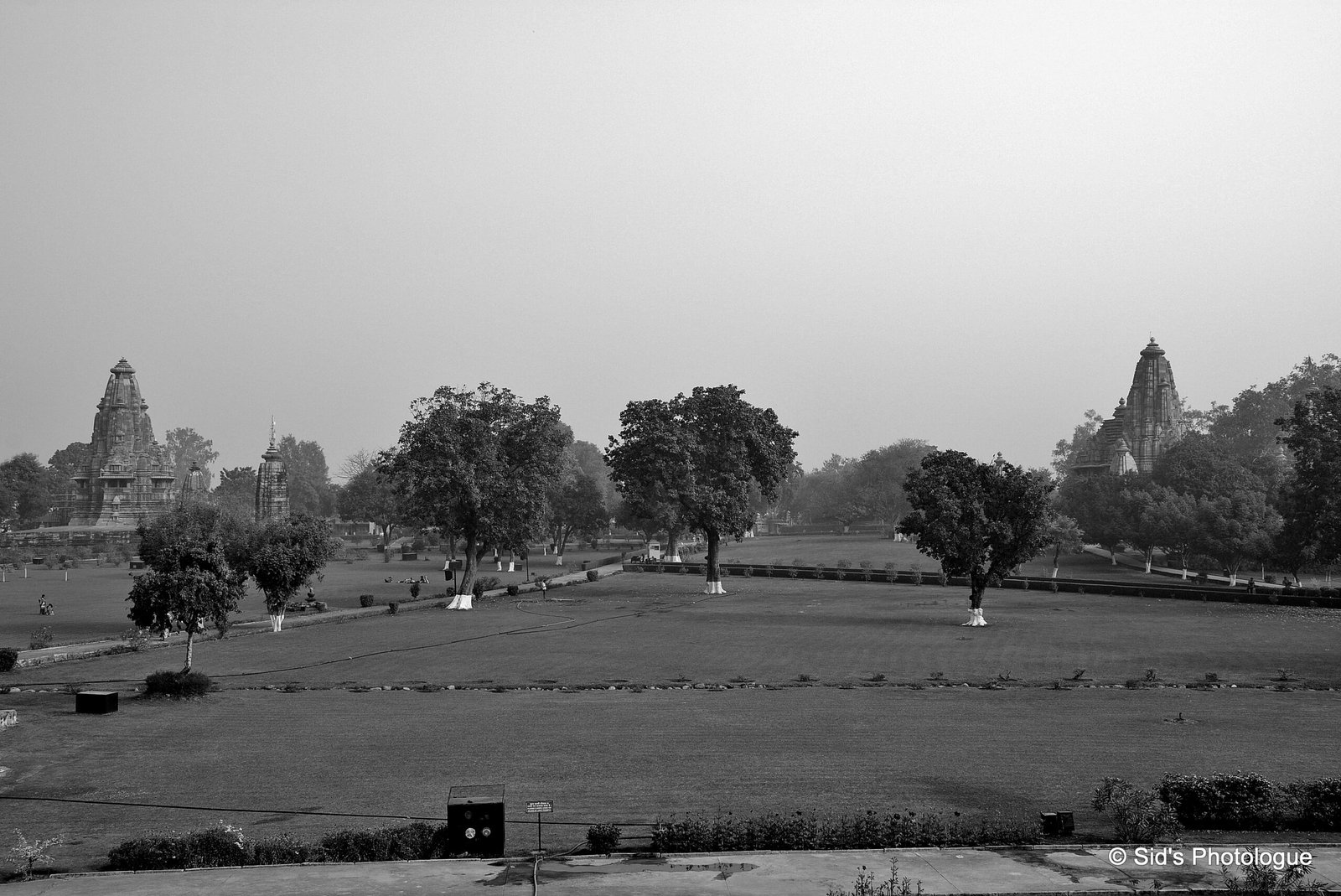
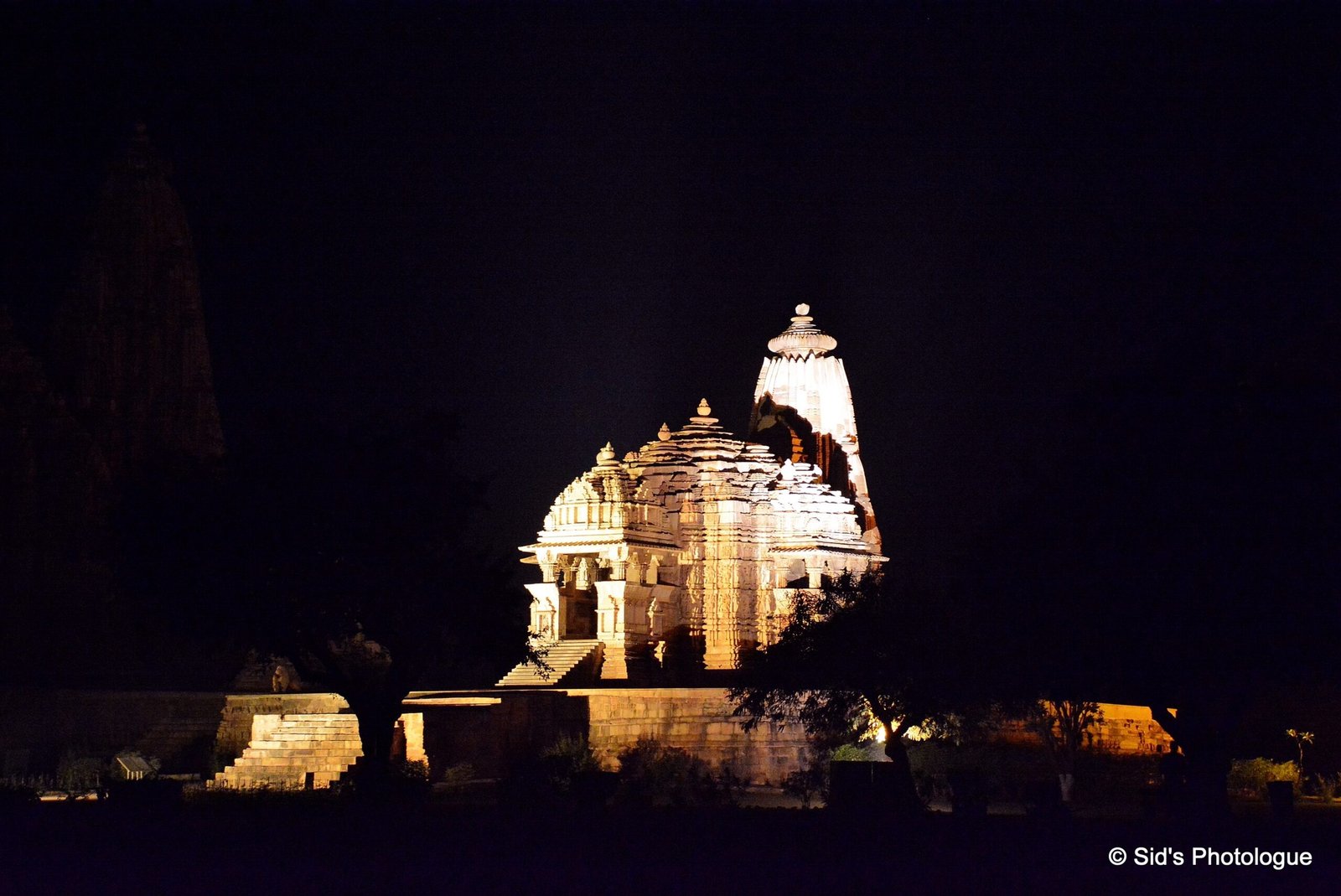
The Khajuraho Dance Festival is held every year in February. It features various classical Indian dances set against the backdrop of the Chitragupt or Vishwanath Temples.
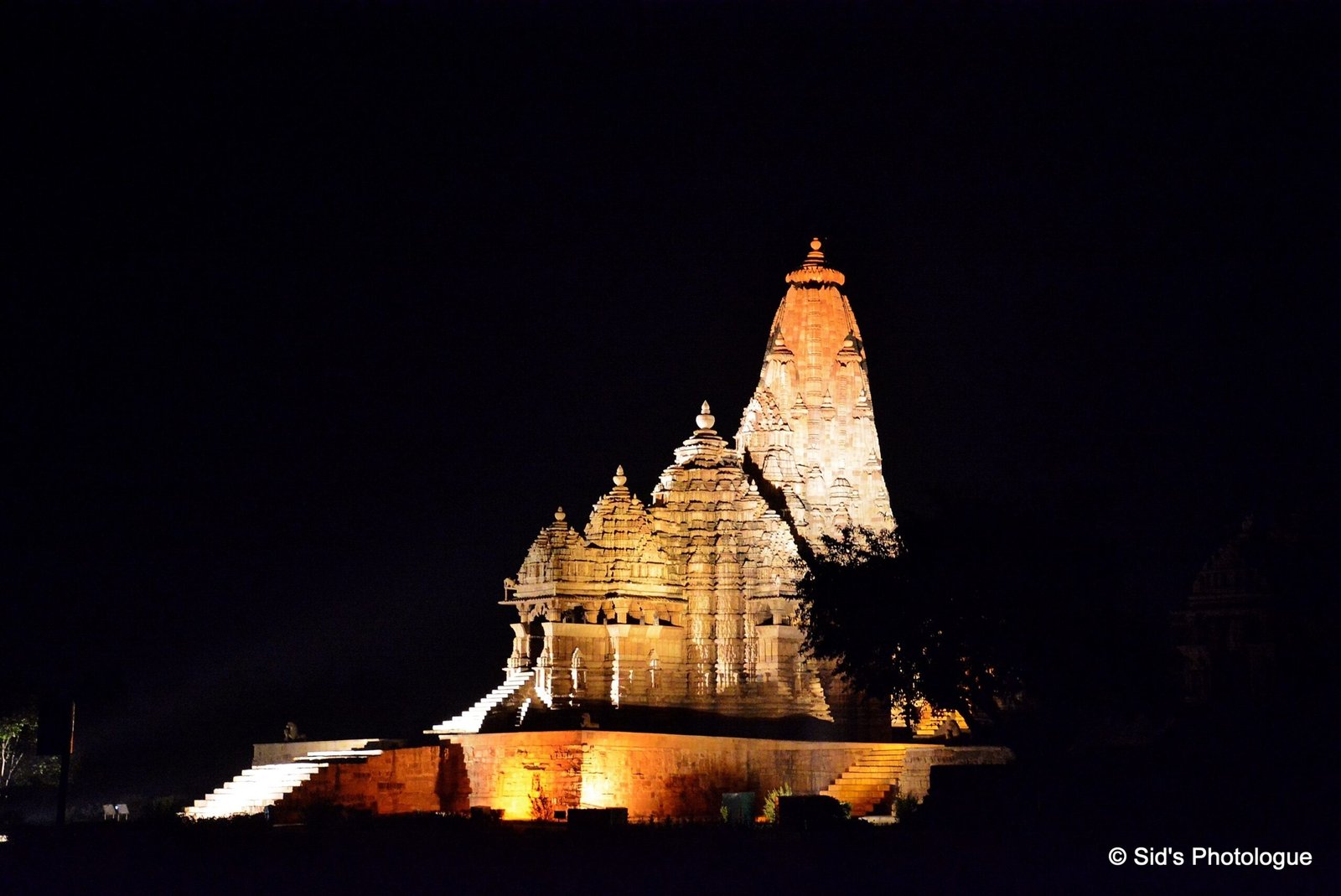
The Khajuraho temple complex also offers a light and sound show every evening. It is held in the open lawns in the temple complex which includes a narration of the temple history and architecture. The jewel on the crown is the narration – in the mesmerising voice of Amitabh Bacchan! A must see show before visiting the temples!!
Being amongst the most beautiful medieval monuments in the country, the Archeological Survey of India has done a commendable job of maintaining & preserving these temples.
….however, the natural calamities, invasions by the Mughal rulers, constant inflow of tourists & the general wear & tear has begun to show its effects on this timeless architecture !!
India is blessed to have such ‘living museums of history’ with some truly stunning pieces of medieval architecture!! Timely conservation of this heritage is the need of the hour, before the sun actually sets on these ‘Abodes of the Gods’!!






















Beautifully captured. Narration is as amazing as always. The intricate artistic work of the artisans looks awesome.
Just wow…
Thank you Meenakshi