Jaisalmer, nicknamed “The Golden city”, is a city in the Indian state of Rajasthan, located 580 kilometres west of the state capital Jaipur.
Jaisalmer is famous for its Fort…….. (fort shall be covered in details in another Photologue!)
…..its sand dunes……
…its rich heritage, culture & art forms, and……
…also for the stories of valor of the Indian Armed Forces!!
Jaisalmer War Museum
Located 10 km short of Jaisalmer on the Jaisalmer – Jodhpur Highway, this war museum was commissioned in 2015…in the Golden Jubilee Commemoration Year of the 1965 India Pakistan War.
The Jaisalmer War Museum was conceptualised to display India’s rich military history and showcase real war efforts as they happened in the past…..
It displays war exhibits which include vehicles and equipment, either used or captured during the course of operations in 1965 and 1971. In the picture : T55 Battle Tank used in 1971 war.
The museum is Open 365 days to people of all nationalities & has a very nominal entry fee.
The Thar Desert, also known as the Great Indian Desert, is a large arid region in the northwestern part of the Indian subcontinent that covers an area of 200,000 sq. km……
It can be accessed from Jaisalmer city, covering a short drive of 50 km. …..
It forms a natural boundary between India and Pakistan, with over 85% area located within India
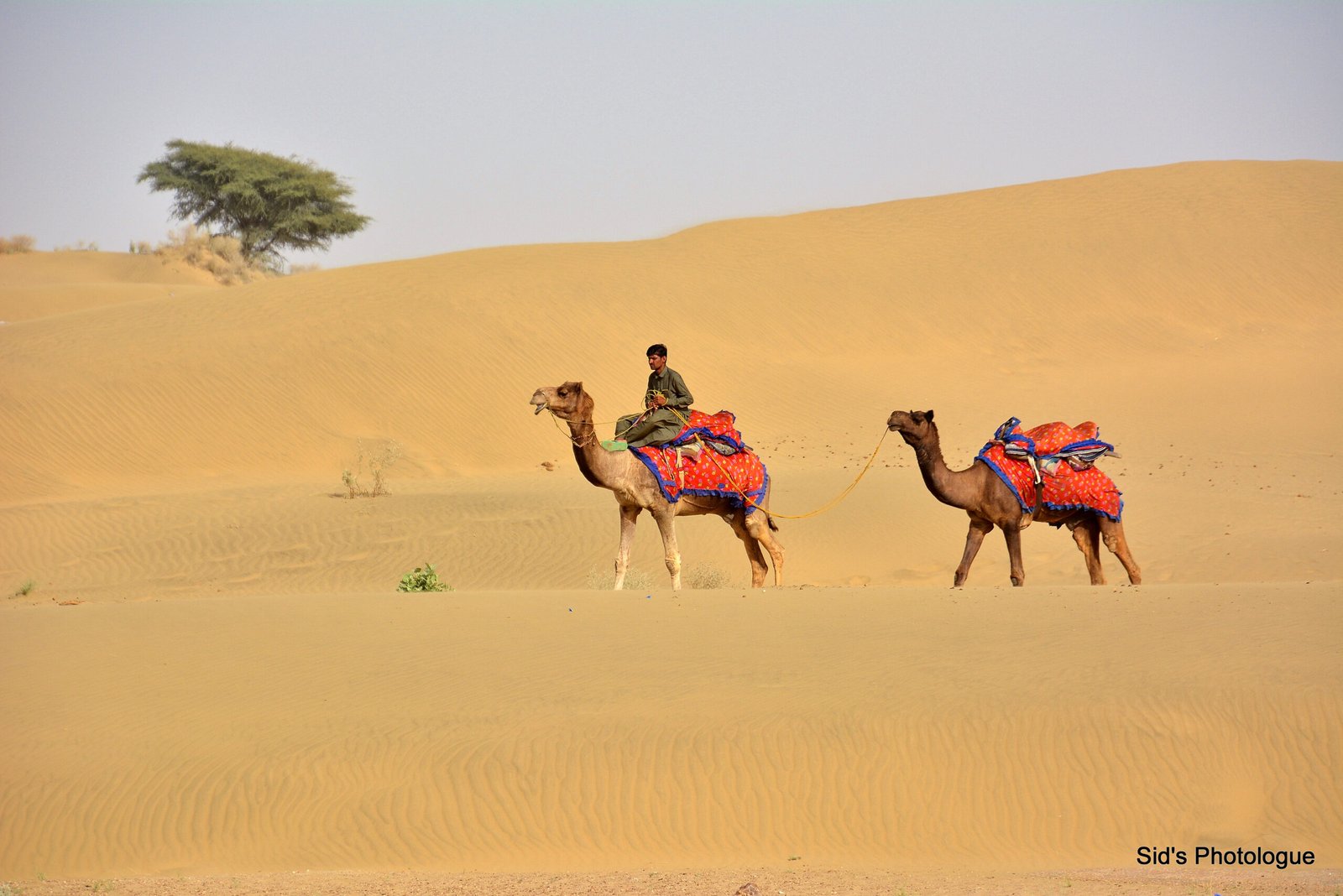
Sam sand dunes are 30-60 meter tall genuine sand dunes located on the city outskirts, at a distance of 40 km from Jaisalmer in a village named Sam…..
The whole area is dotted with Desert Camp hotels……
Some with basic amenities…..
….& some are royal!!
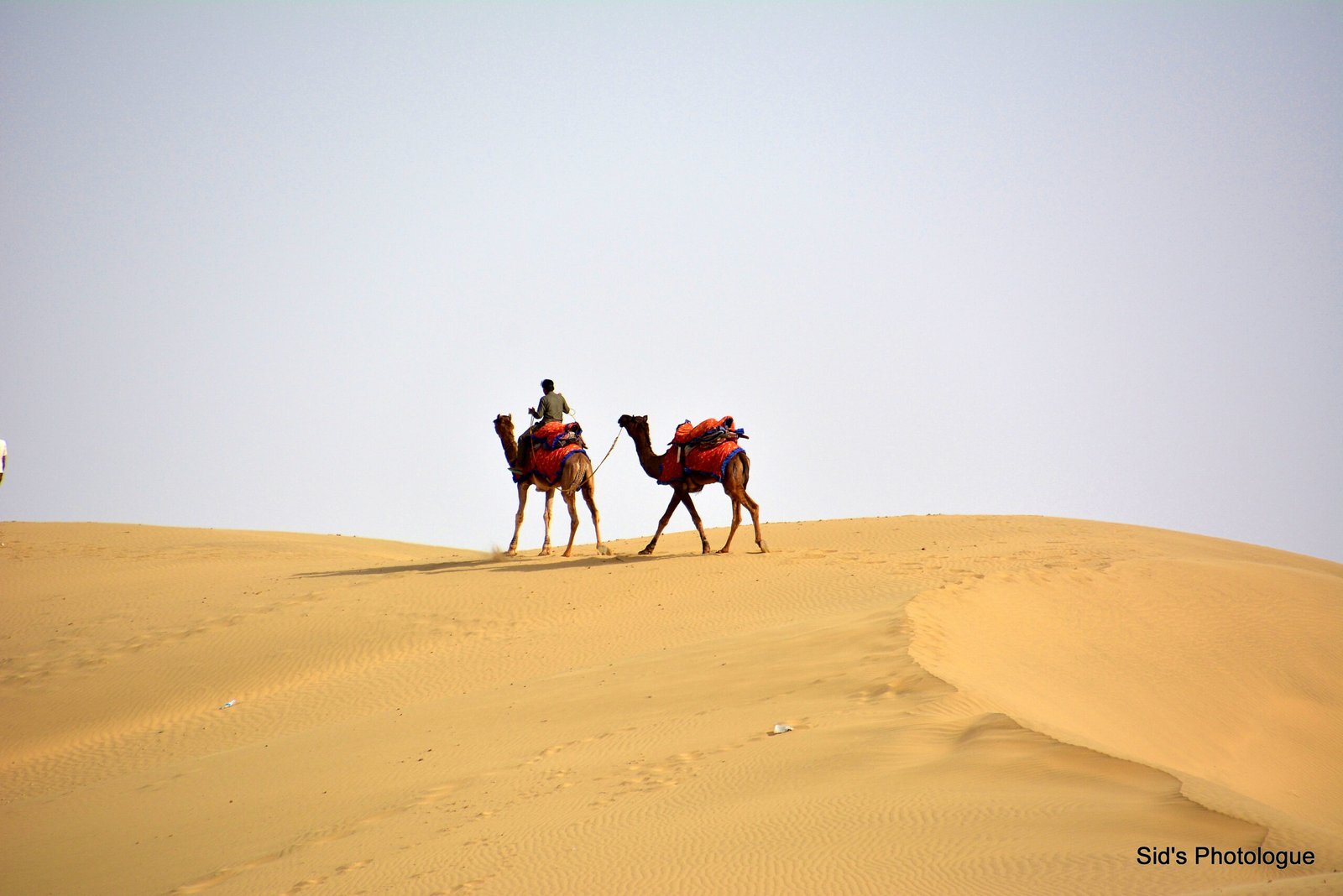
However, the standard itinerary of most of these hotels include, taking the guests on the camel rides to the nearby sand dunes….
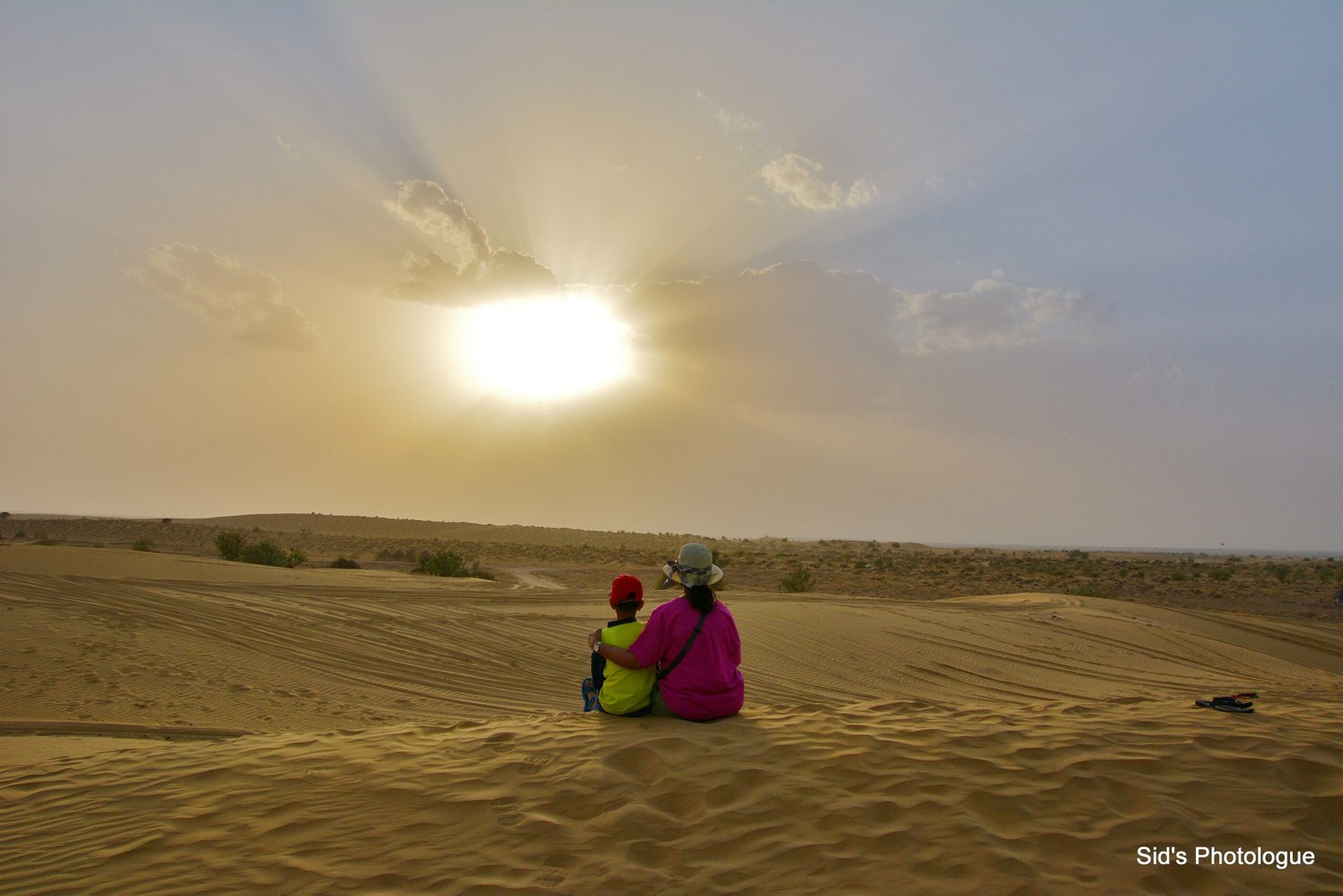
…..enjoy the sun disappearing over the vast ocean of sand….
…..& return to the resort for……
…an evening filled with food & showcasing their rich cultural art forms!!
The Thar Desert is the most widely populated desert in the world, with a population density of 83 people per sq. km, the inhabitants comprise Hindus, Jains, Sikhs and Muslims. In spite of dry & arid hostile environment, about 40% of the total population of Rajasthan live in the Thar Desert. The main occupation of the people is agriculture and animal husbandry. However……..
…….a colourful culture rich in tradition prevails in this desert. The people have a great passion for folk music, poerty &…..
…..folk dance!
Initially, the entire population of Jaisalmer lived within the fort. However, with the increase in the area’s population, many of the town’s residents gradually relocated to the foot of the Trikuta Hill……
The town’s population has since largely spread out, well beyond the old walls of the fort, and into the adjacent valley below……
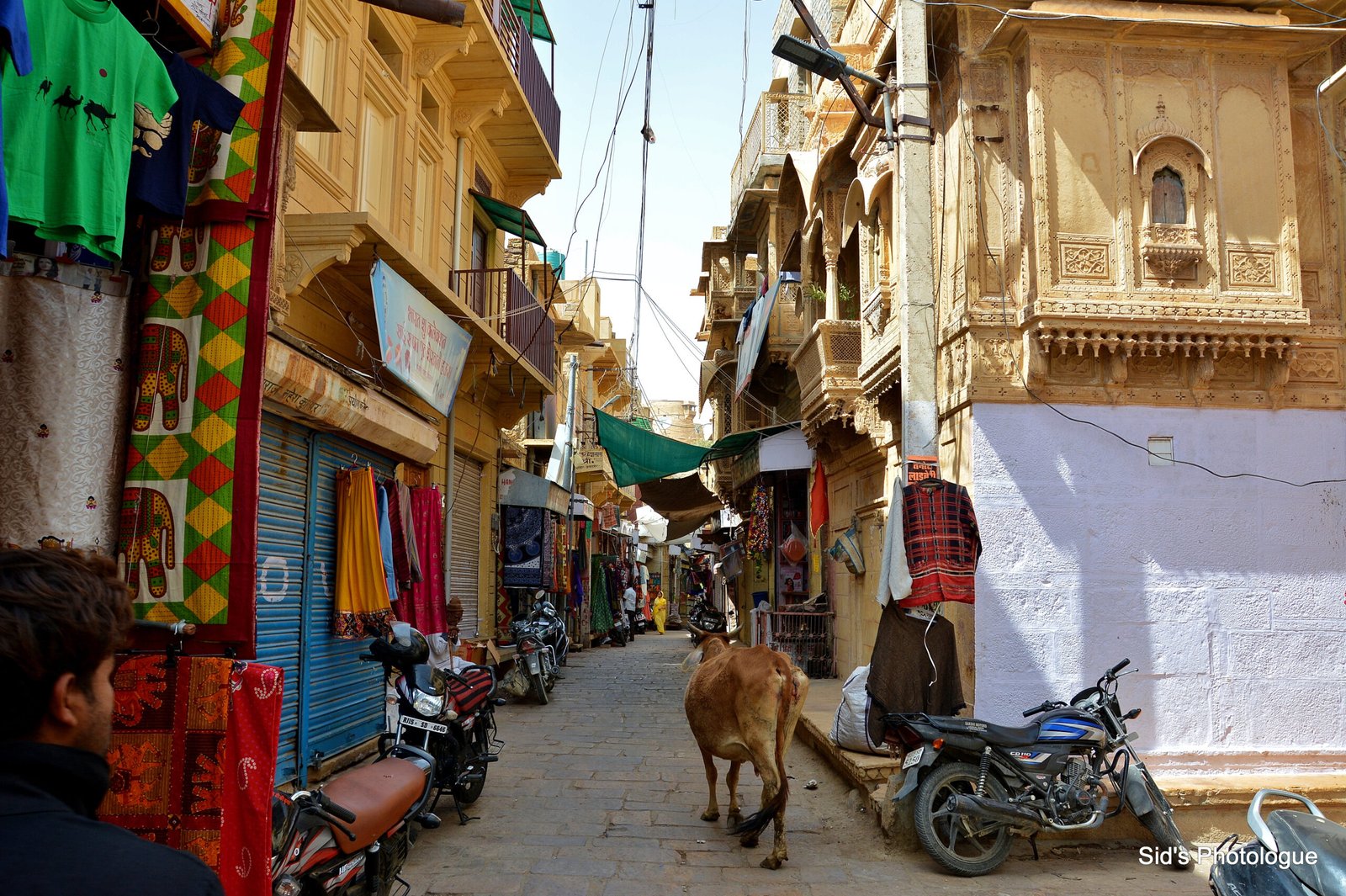
Jaisalmer is well known for its rich culture and intricately designed marvels of the architecture, which have won Jaisalmer a distinctive place in the hearts of tourists from around the world…..
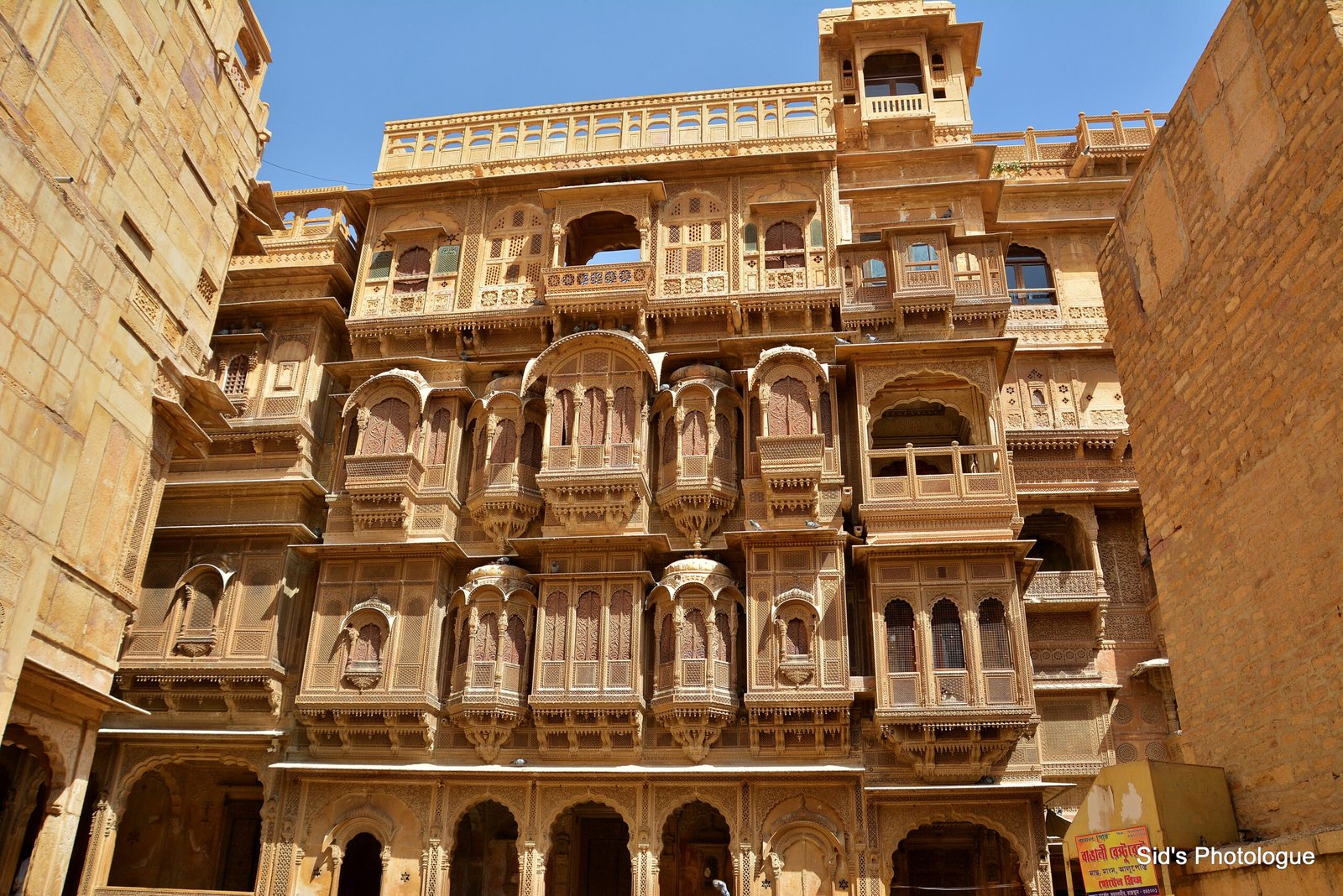
Patwa Haveli. These are a cluster of five havelis aligned in a narrow lane in the heart of the city……
Of the five havelis, the first haveli in the lane aka the Kothari’s Patwa Haveli is not only extraordinarily preserved and restored but is also open to visitors to experience the lifestyle of the erstwhile patwas.
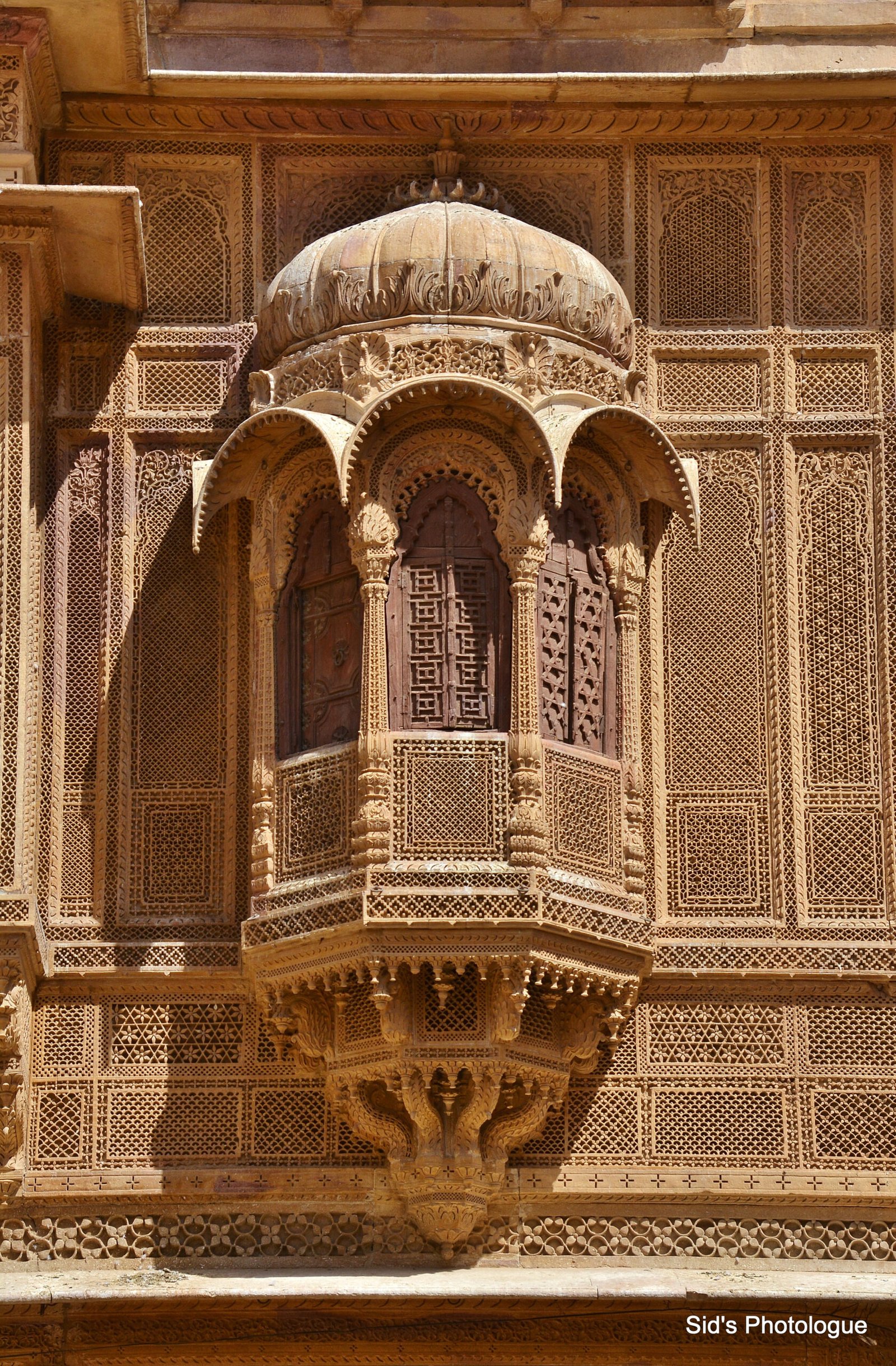
It is one of the finest, oldest and the largest havelis in Jaisalmer, which is full of artistic work in each corner, be it gracefully carved pillars, façade…..
… or the balconies (Jharokhas).
These were contructed in the early 19th century by Patwa Gumanmal Bafna for their residential purpose……
Keeping in mind the climate of Jaisalmer, the floors are made of mud & wood is used for the ceilings, keeping the Havelis cool in summers & warm in winters…..
Each Haveli has a diwankhana, guest-rooms, kitchen, basement, stairways, safe & terraces – which overlook the majestic Jaiselmer Fort.
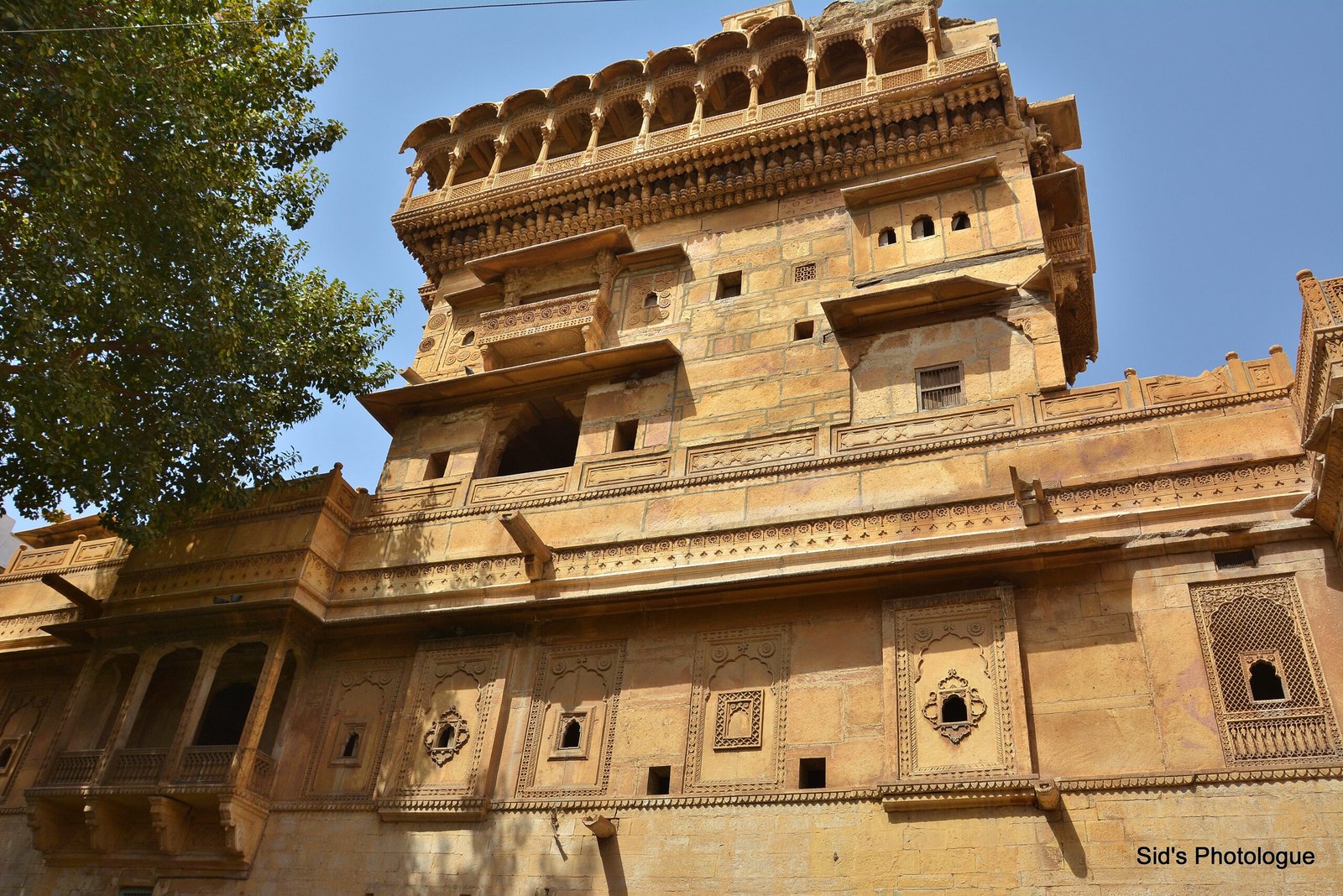
Salim Singh Ki Haveli – It was built in 1815 by Salim Singh, the prime minister of the kingdom when Jaisalmer was the capital. This mansion was not created with the help of cements and mortar- the stones are connected with strong iron rods. This mansion is famous for its distinctive architecture as it is constitutes 38 gracefully carved balconies.
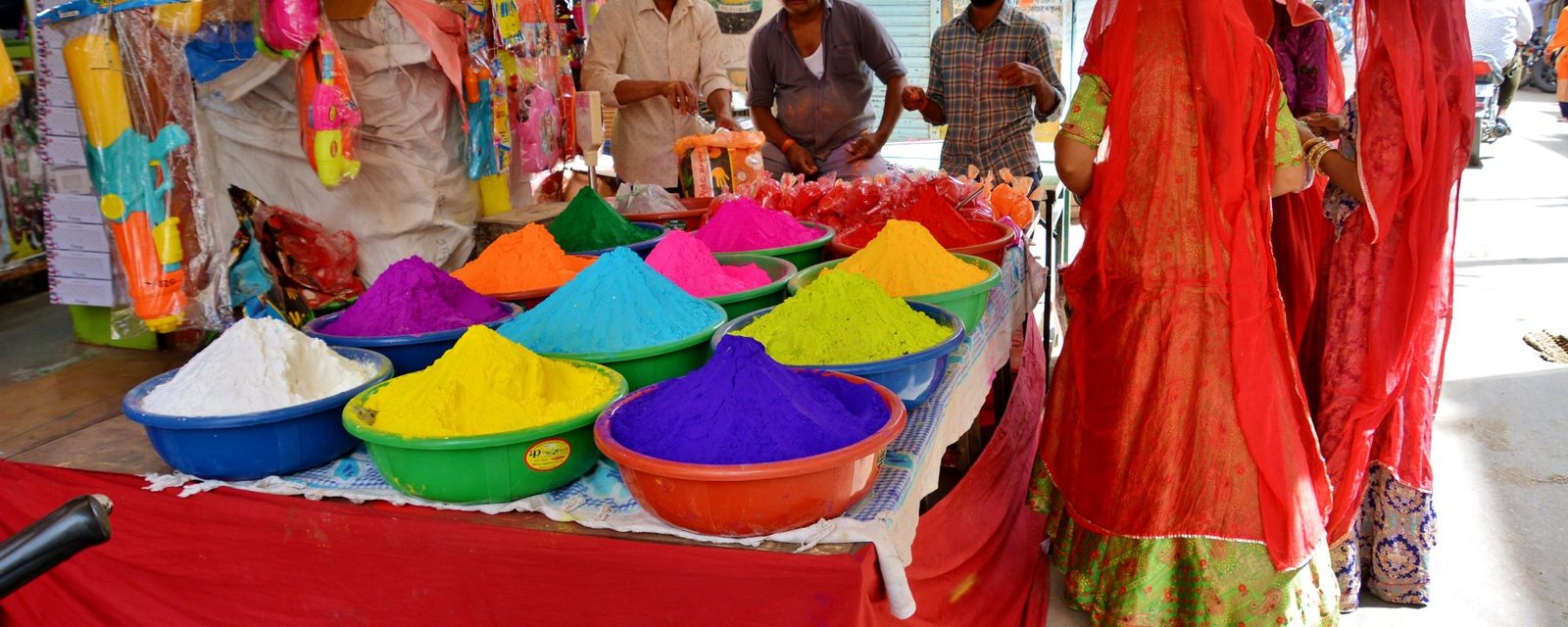
The colours of Holi adorns the streets of Jaisalmer
Nathmalji ki Haveli – It was constructed by Maharawal Berisal in 1885, & was gifted to his Diwan, Mohata Nathmal, the Prime Minister of Jaisalmer. The chief architects of this haveli were two brothers, named Hathi and Lulu. It is believed that both the brothers started building the facets of the haveli simultaneously. The two sides are similar, but not identical.
The facade of this haveli includes birds, elephants, flowers, bicycle, steam engine and soldiers. The entrance of the haveli is guarded by two huge elephants carved from yellow stone. The intricately carved jharokha windows and balconies are examples of the illustrious craftsmanship of Muslim silavats who created poetry in stone at the wondrous Nathmalji ki Haveli.
One of the most well-known tourist attractions in Jaisalmer is the Gadi Sagar Lake……
Founded in 1367 by the first ruler of the city Maharawal Jaisal, this man made reservoir was built to o provide a source of water to the people of Jaisalmer inside the Fort…..
The banks of the Lake consist of shrines, temples, ghats and Chattris……
Placed southwards of the city, this Lake has an entry archway in yellow sandstone, Telia-Pol, which was made by Telia, a royal courtesan
One can indulge in boat riding here or simply enjoy a leisure walk. The Jaisalmer fort in the backdrop, offers an amazing view. This Lake is largely visited during the yearly celebrations of Gangaur festival.
This location appeared in the movie Hum Dil De Chuke Sanam in the song ‘Albela Sajan Aayo Re’
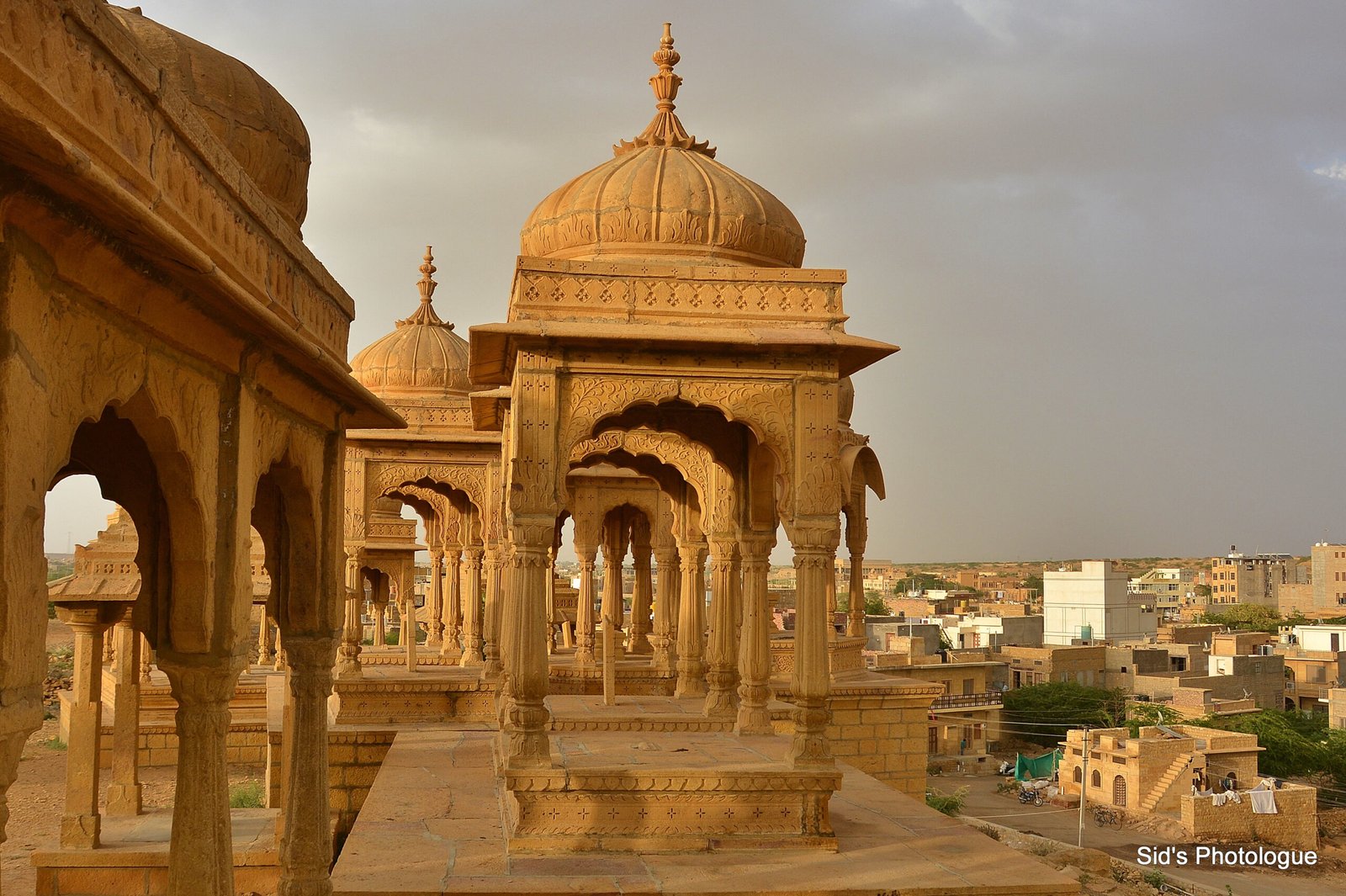
Bada Bagh, (literally Big Garden) is a complex of Chhatris (cenotaphs) about 6 km north of Jaisalmer….
It is a set of royal cenotaphs, or chhatris, of Maharajas of Jaisalmer state, starting with Jai Singh II (died. 1743)
Bada Bagh is situated on a small hill. The cenotaphs are of different sizes and carved of sandstone. There are cenotaphs for rulers, queens, princes and other royal family members.
Vyas Chhatris – as seen from the Jaisalmer Fort
Dedicated to Sage Vyas, who wrote the epic Mahabharat; Vyas Chhatri has beautiful memorials, and is a cremation ground for Brahmins.
The yellow sandstone cenotaphs are built on raised platforms, with intricately designed chhatris on top of finely chiseled pillars, overlooking the Jaiselmer Fort
>>> & the journey continues<<<
Next….I will take you to the majestic Fort of Jaisalmer. Stay tuned!!
















test