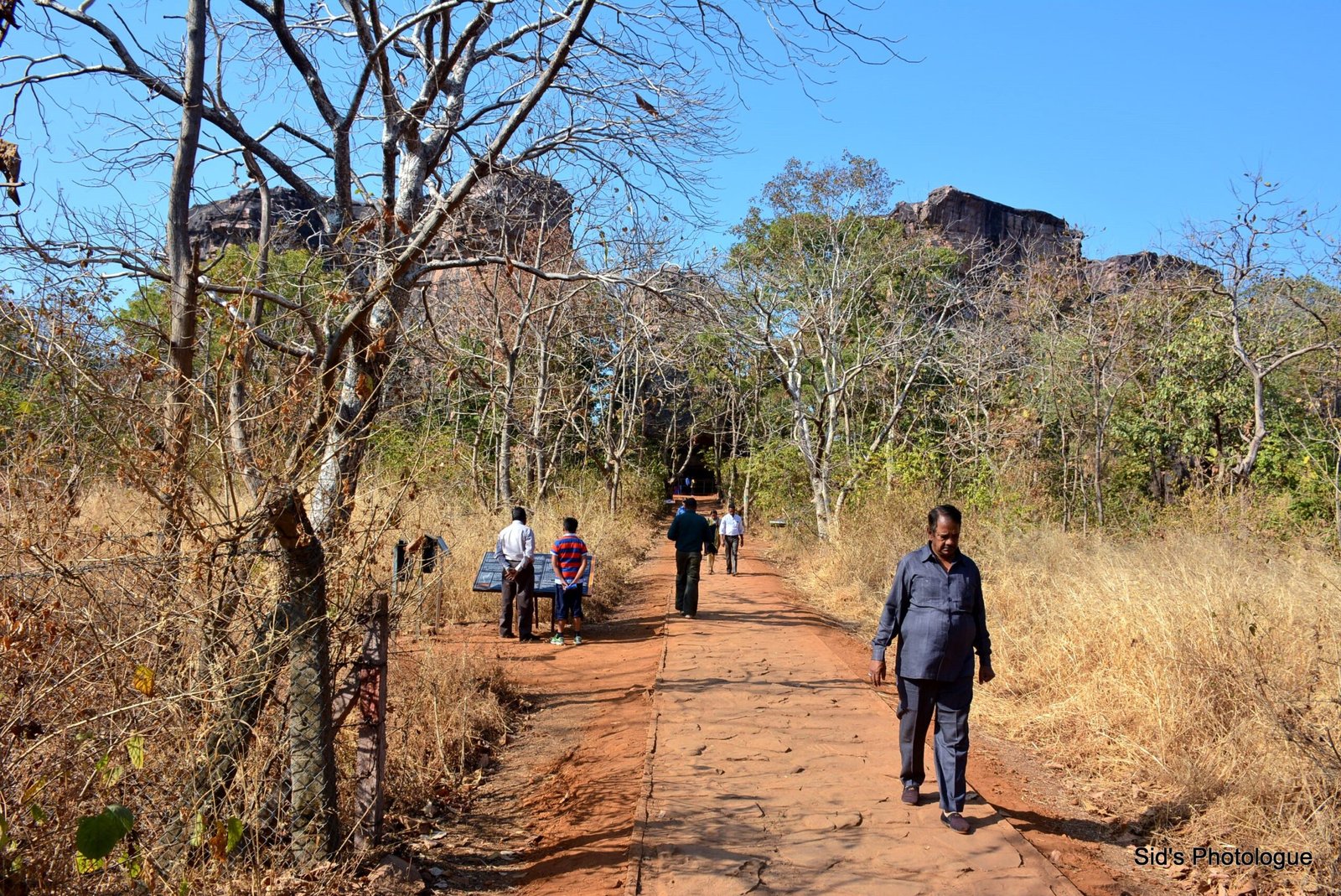
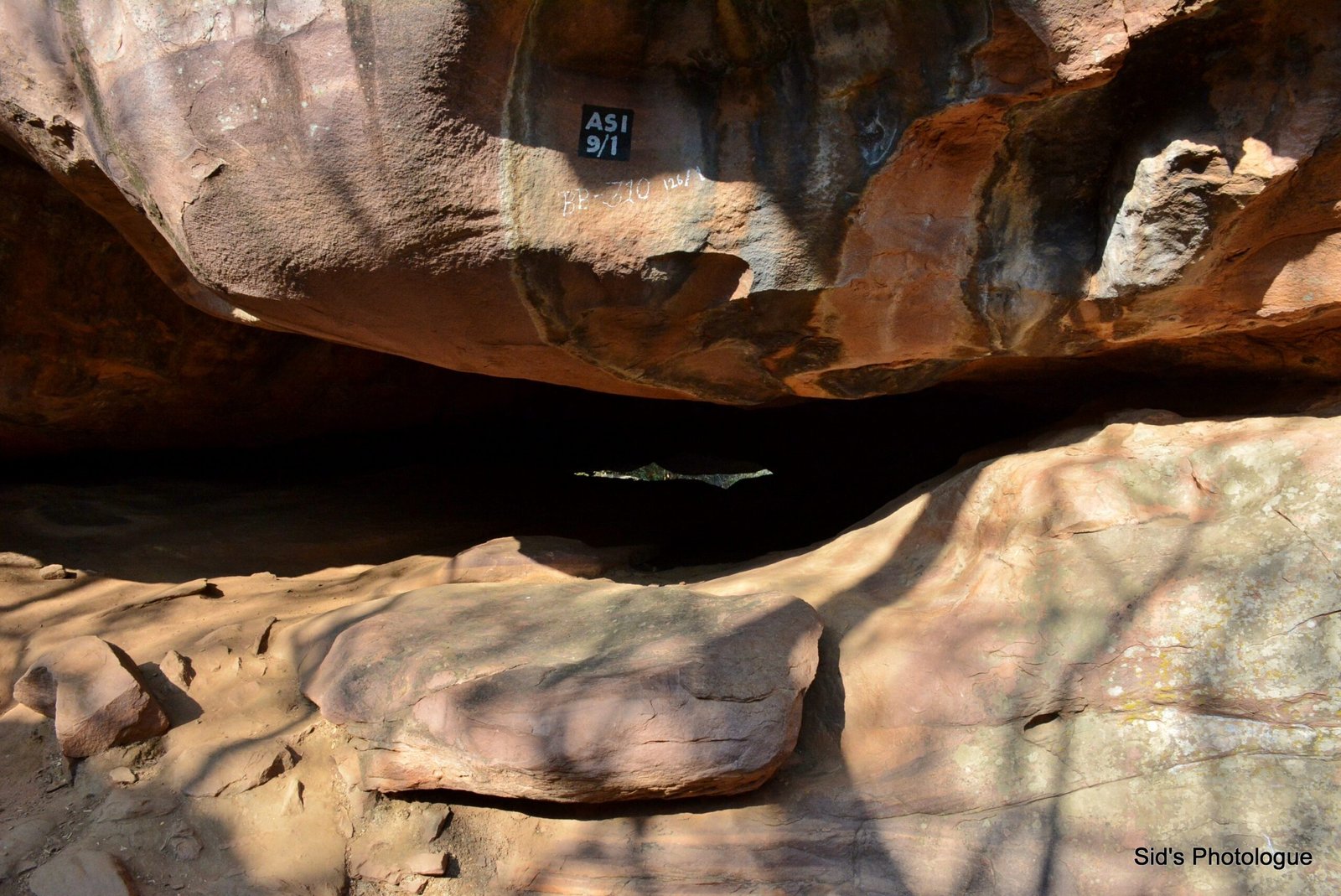
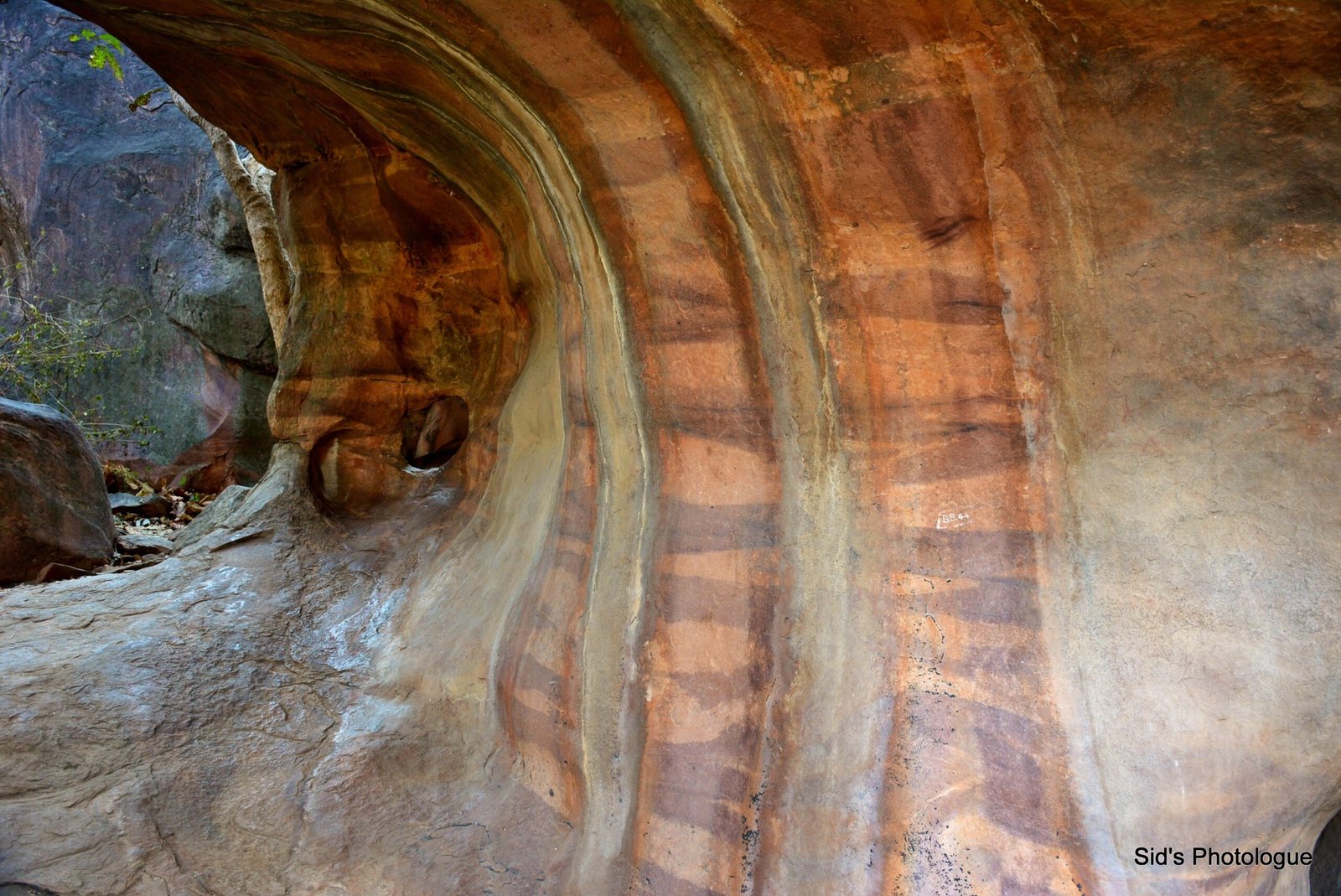
The sprawling caves of Bhimbetka are located about 45 km northeast of Bhopal, along the Bhopal-Hoshangabad highway…..
The Bhimbetka rock shelters are an archaeological site of the Paleolithic era, exhibiting the earliest traces of human life on the Indian Subcontinent, and thus the beginning of the Indian Stone Age. Archaeologists believe that some of these shelters were inhabited by Homo erectus over 100,000 years ago & some of the Stone Age rock paintings found among the Bhimbetka rock shelters are 30,000 years old.
The name Bhimbetka (भीमबेटका) is associated with Bhima, a hero-deity of the epic Mahabharata. The word Bhimbetka is said to derive from Bhimbaithka (भीमबैठका), meaning “sitting place of Bhima”.
The caves of Bhimbetka were an accidental discovery, made in 1957-58 by an archaeologist from Vikram University, Ujjain, Dr. Vishnu Wakankar. Dr. Wakankar strayed too far from the beaten path and found himself amidst this prehistoric treasure trove. In due course of time, the archaeological excavations yielded remains, serially from the Lower Palaeolithic Age to the Early medieval Ages.
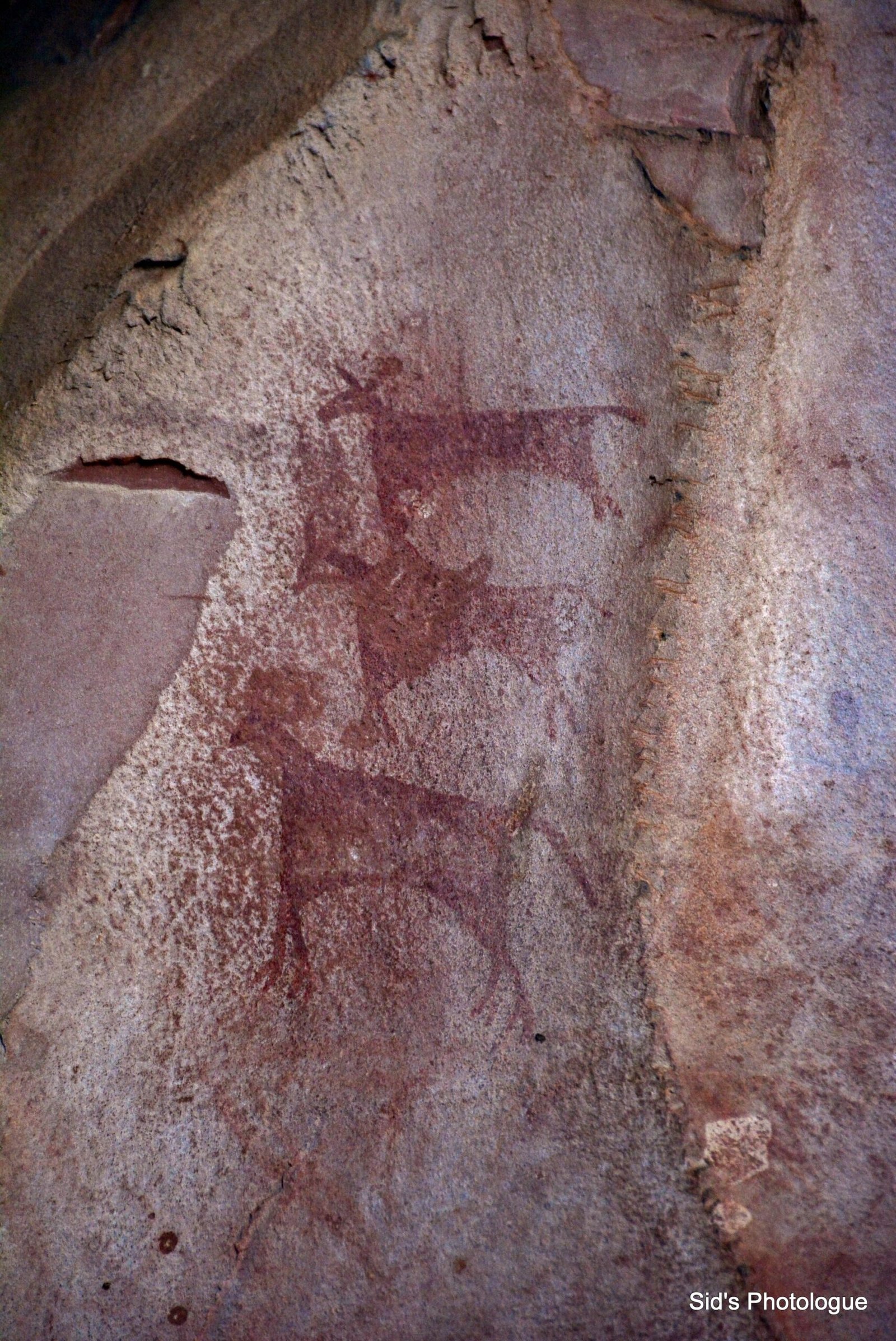
The rock shelters and caves of Bhimbetka have a large number of paintings. The oldest paintings are considered to be 30,000 years old, but some of the geometric figures date to as recently as the medieval period. The colors used are vegetable colors which have endured through time because the drawings were generally made deep inside a niche or on inner walls. The drawings and paintings can be classified under seven different periods.
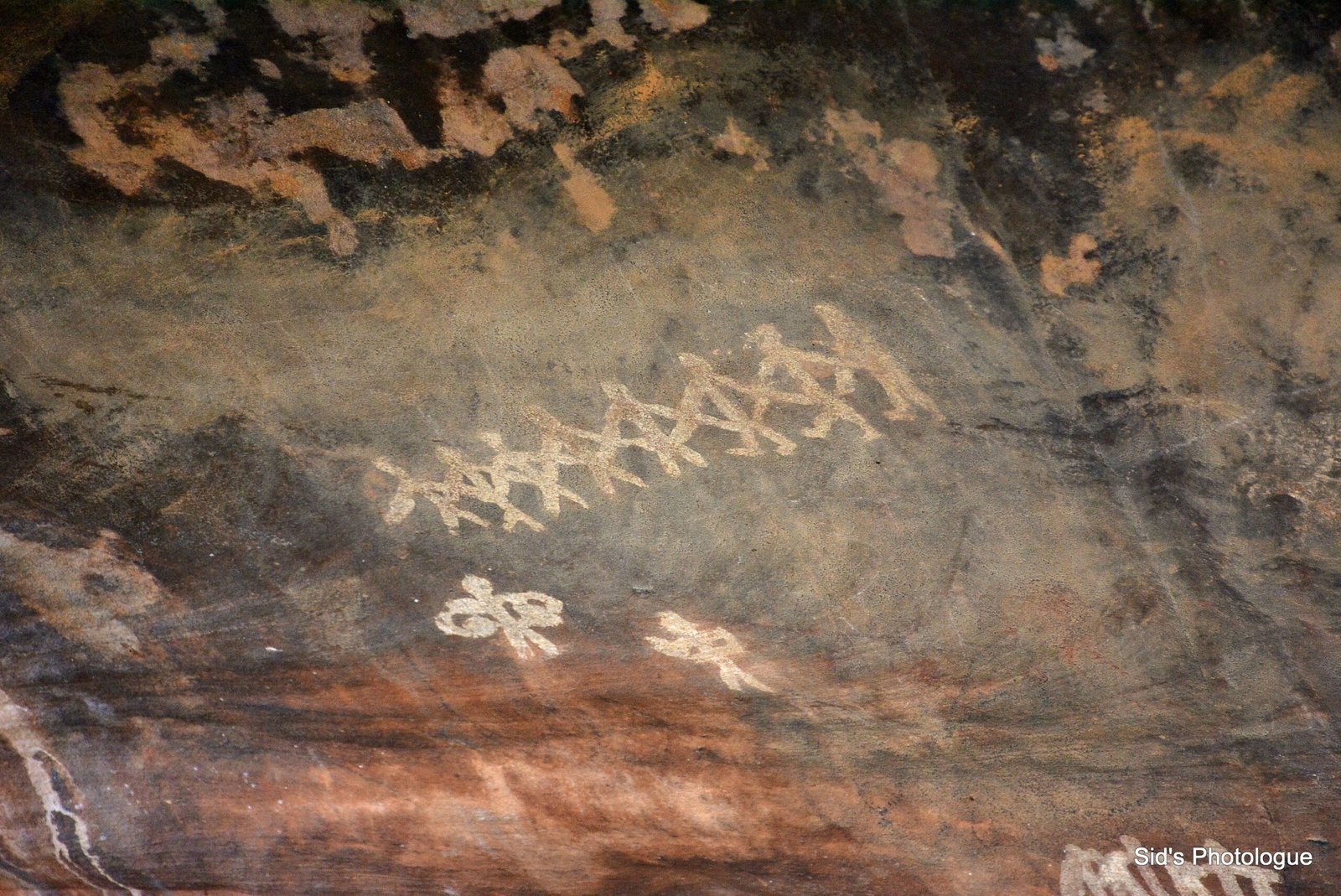
Upper Palaeolithic Period (Period I) : These are linear representations, in green and dark red, stick like human figures…..
The Upper Palaeolithic paintings also depict group dancing activities.
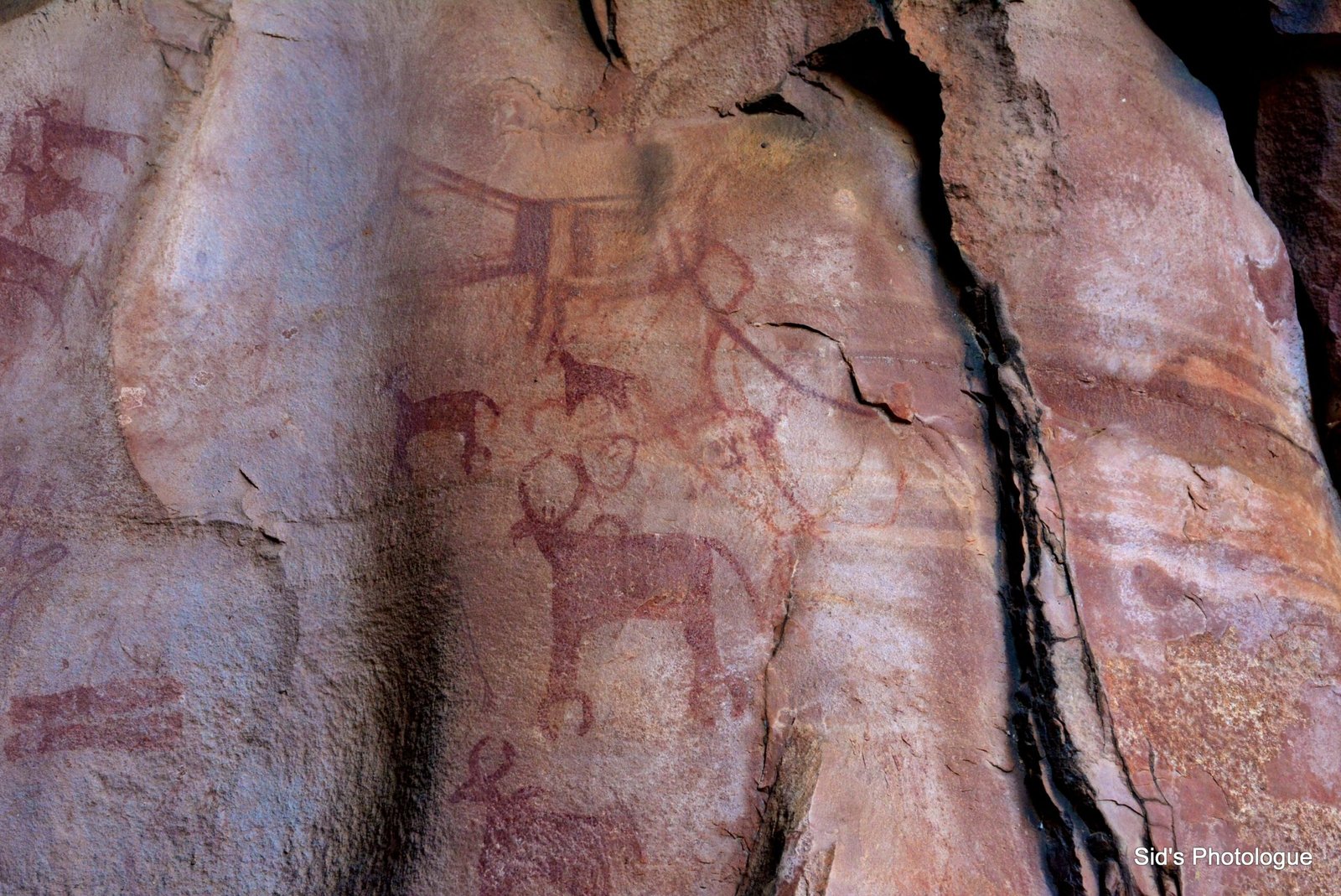
Mesolithic Period (Period II ): Comparatively small in size the stylised figures in this group show linear decorations on the body. In addition to animals there are human figures and hunting scenes, giving a clear picture of the weapons they used: barbed spears, pointed sticks, bows and arrows……
Can you spot a Tiger ??
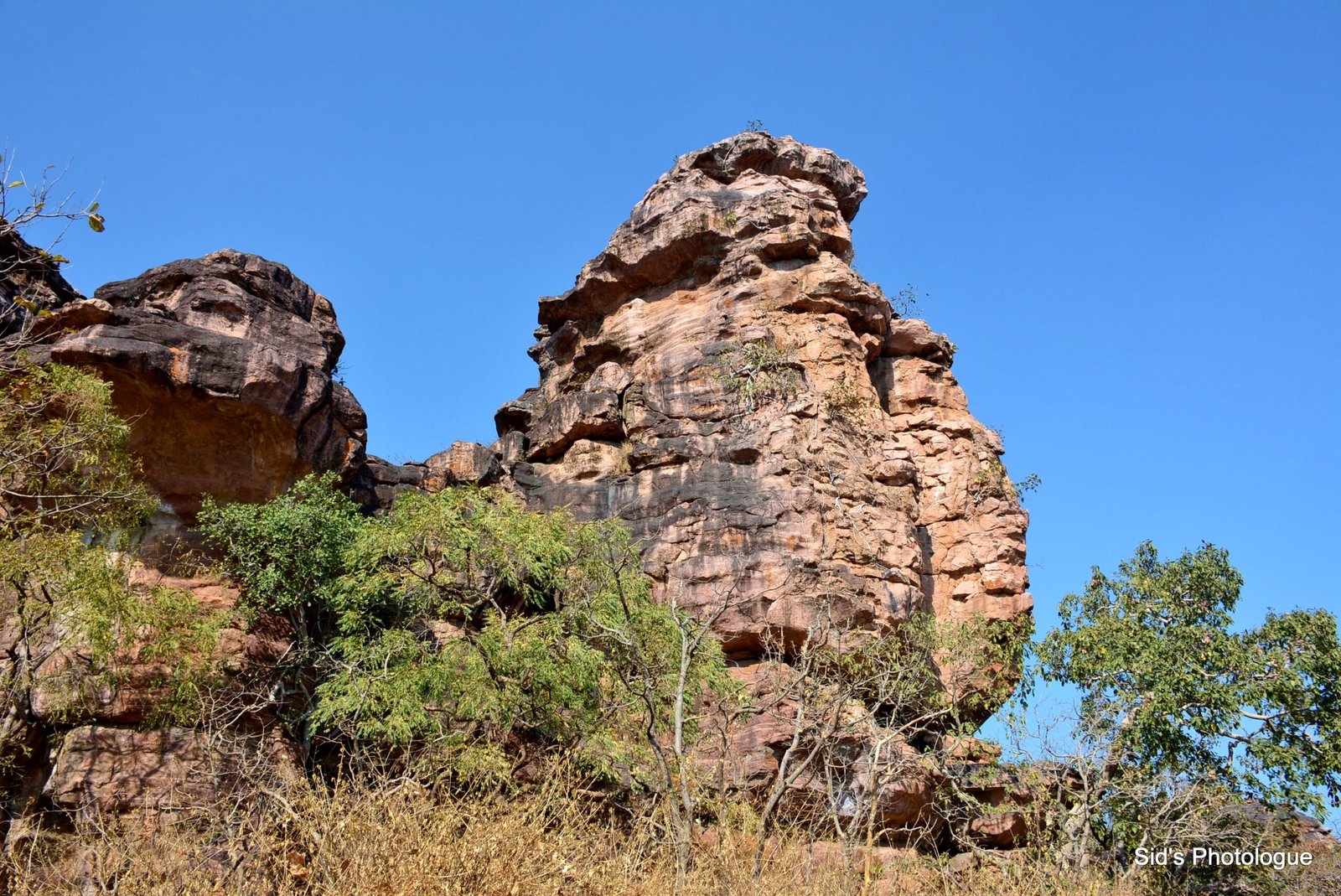
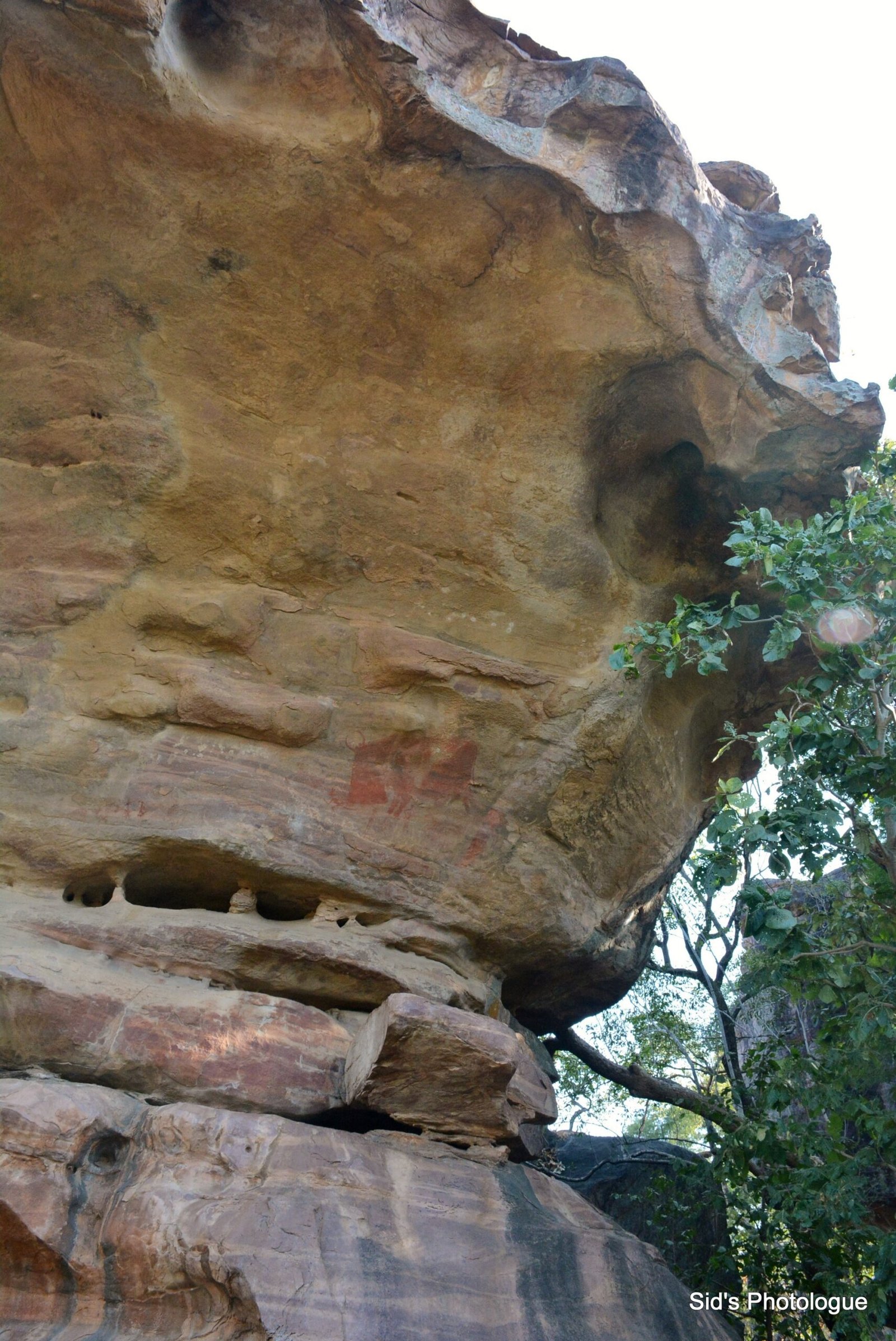
The Eagle Rock
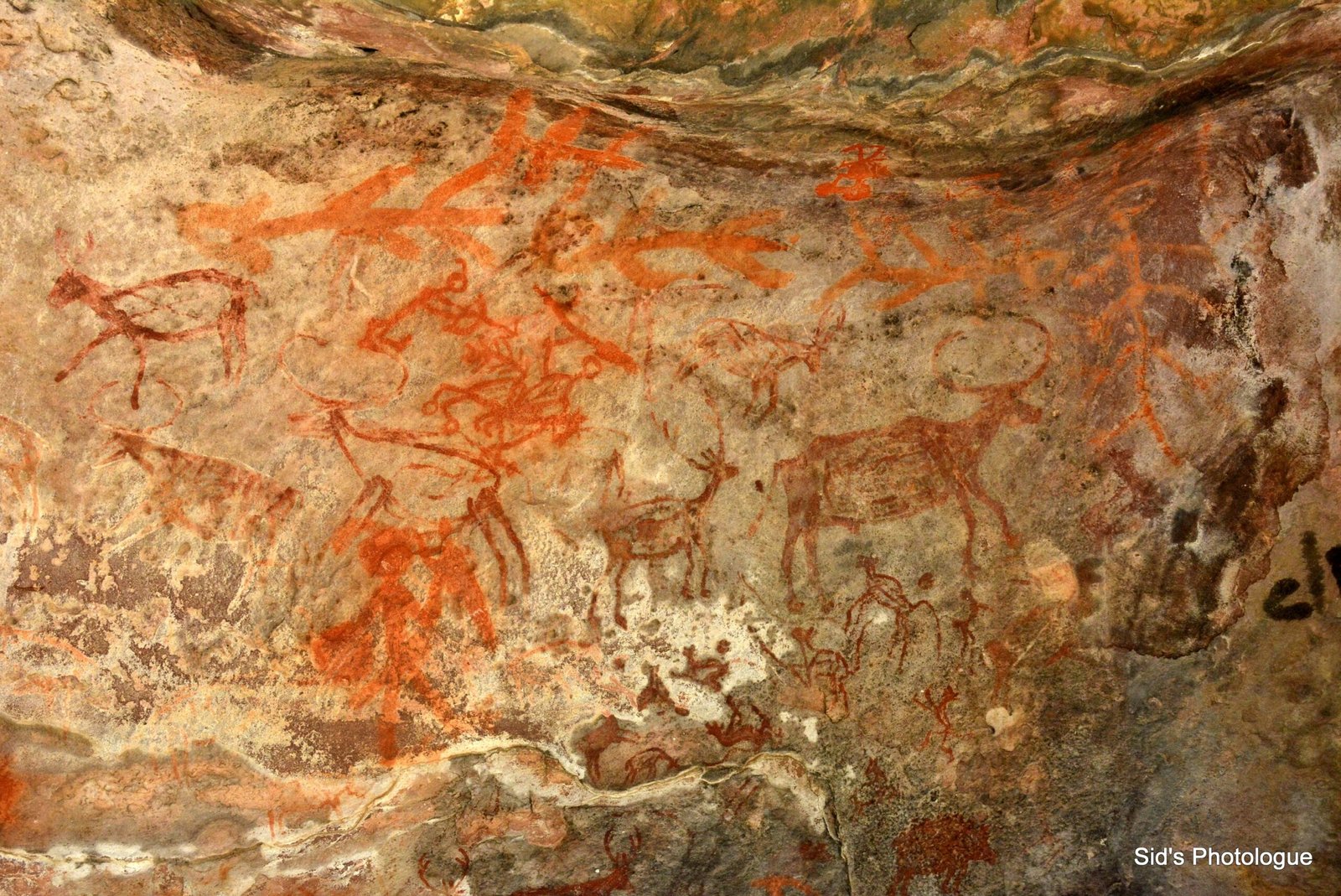
Zoo Rock – The depiction of elephants, Barasingha, bison, deer, peacock, snake as well as communal dances, birds, musical instruments, mothers and children, pregnant women, men carrying dead animals, drinking and burials appears in rhythmic movement.
The cover of the dense forest and vegetation protected these rock paintings from being lost to the vagaries of nature. Executed mainly in red and white, with the occasional use of green and yellow the paintings has its themes taken from the everyday common events of survival & society….
…..the scenes usually depict hunting, dancing, horse and elephant riders, animal fights, honey collection, decoration of bodies etc…..
…..thus essentially depicting the detail of social life during the long period of time, when man used to frequent these rock shelters.
The colours used by the cave dwellers were prepared by combining manganese, hematite, soft red stone and wooden charcoal. Animal fats and extracts of leaves were also commonly used in the mixture.
Chalcolithic Period (Period III ) : Similar to the paintings of the Mesolithic, these drawings reveal that during this period the cave dwellers of this area were in contact with the agricultural communities of the Malwa plains, exchanging goods with them.
Early historic Period (Period IV & V): The figures of this group have a schematic and decorative style and are painted mainly in white, red and yellow. The association is of riders, depiction of religious symbols, tunic-like dresses and the existence of scripts of different periods. The religious beliefs are represented by figures of yakshas, tree gods and magical sky chariots.
Medieval Periods (Period VI & VII) : These paintings are geometric linear and more schematic, but they show degeneration and crudeness in their artistic style. The colors used by the cave dwellers were prepared by combining manganese, hematite and wooden coal.
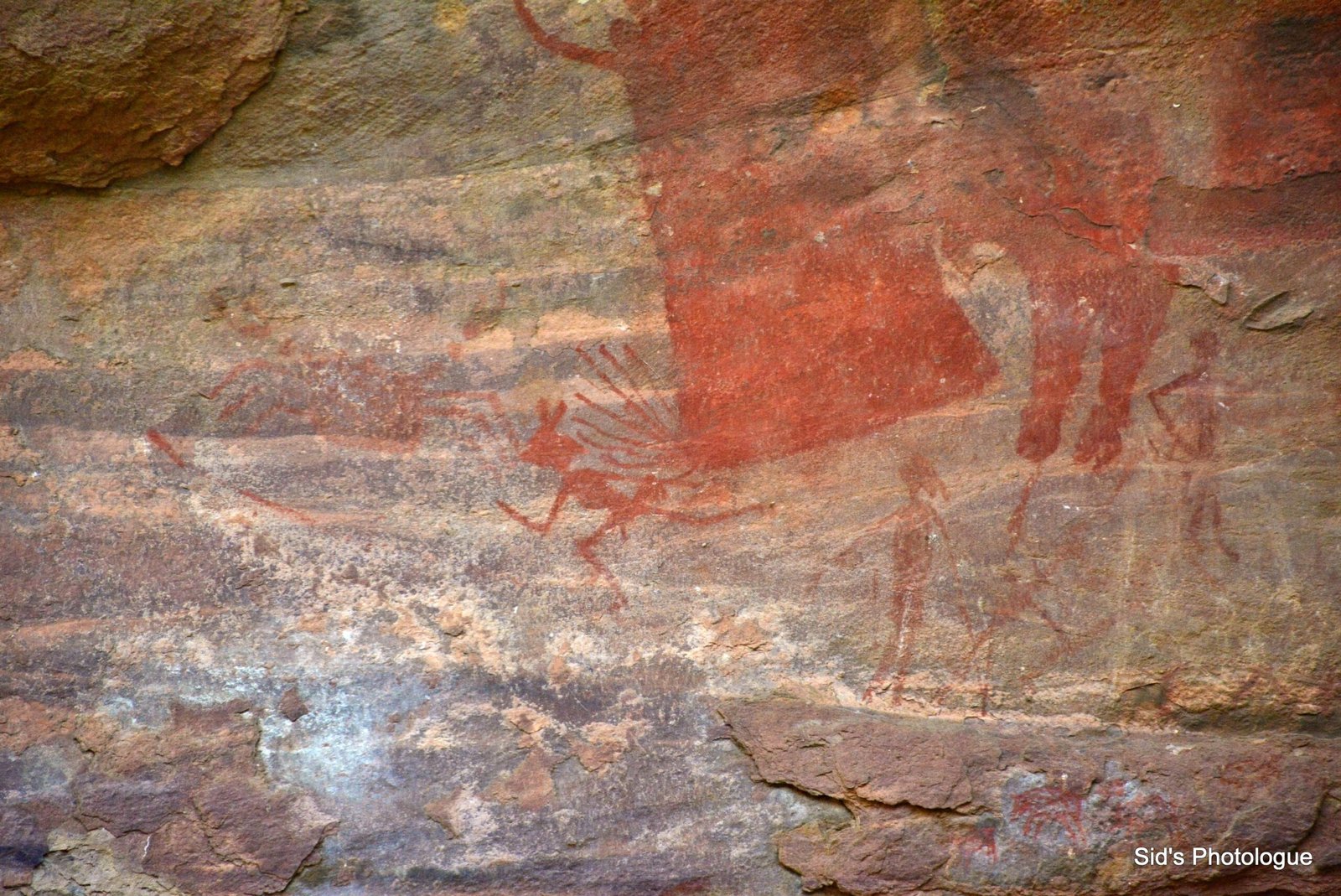
The famous Boar Rock
It has a A Mesolithic mythical boar, painted in dark red……
…this is the only picture in the whole rockshelter arena that depicts humans being chased by an animal !!
The entire area is covered by thick vegetation, has abundant natural resources in its perennial water supplies, natural shelters, rich forest flora and fauna that helped preserve this rich heritage.
The site bears a striking resemblance to similar rock art sites such as Kakadu National Park in Australia, the cave paintings of the Bushmen in Kalahari Desert and the Upper Paleolithic Lascaux cave paintings in France
Slowly, as the time lapsed, religious images were interspersed, which delineates the change in psychological make-up of the people. While the oldest of all the paintings dates back to around 30,000 yrs back, while the most recent is around 1000 yrs old….
The Bhimbetka rock shelters are like the colorful shards of a broken mirror that unite to provide a rich glimpse to the lives of our predecessors…..A mirror that holds innumerable clues into our evolution….. a mirror that holds our past, which made our present, perfect !!!!